 FLY
FLY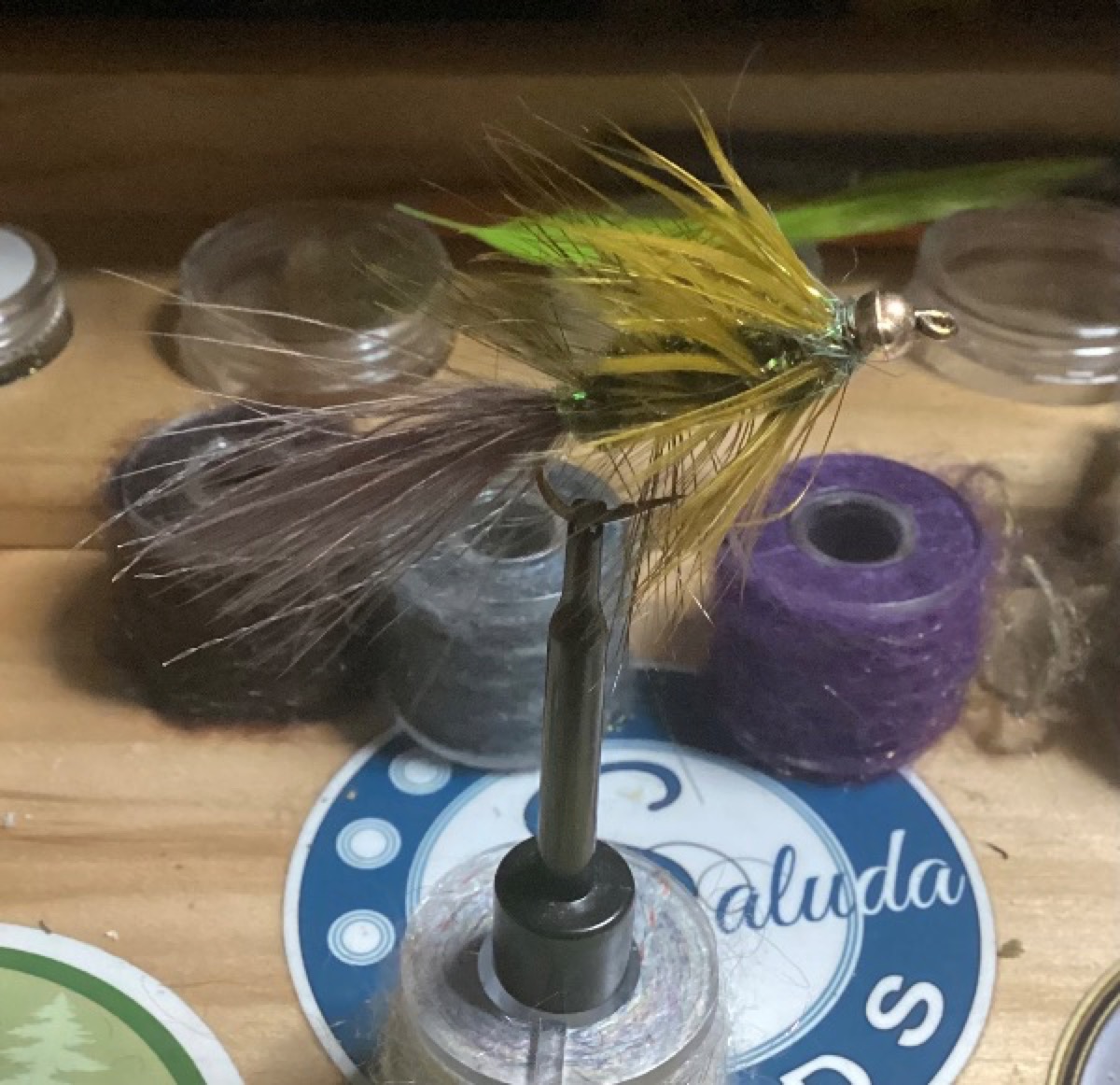
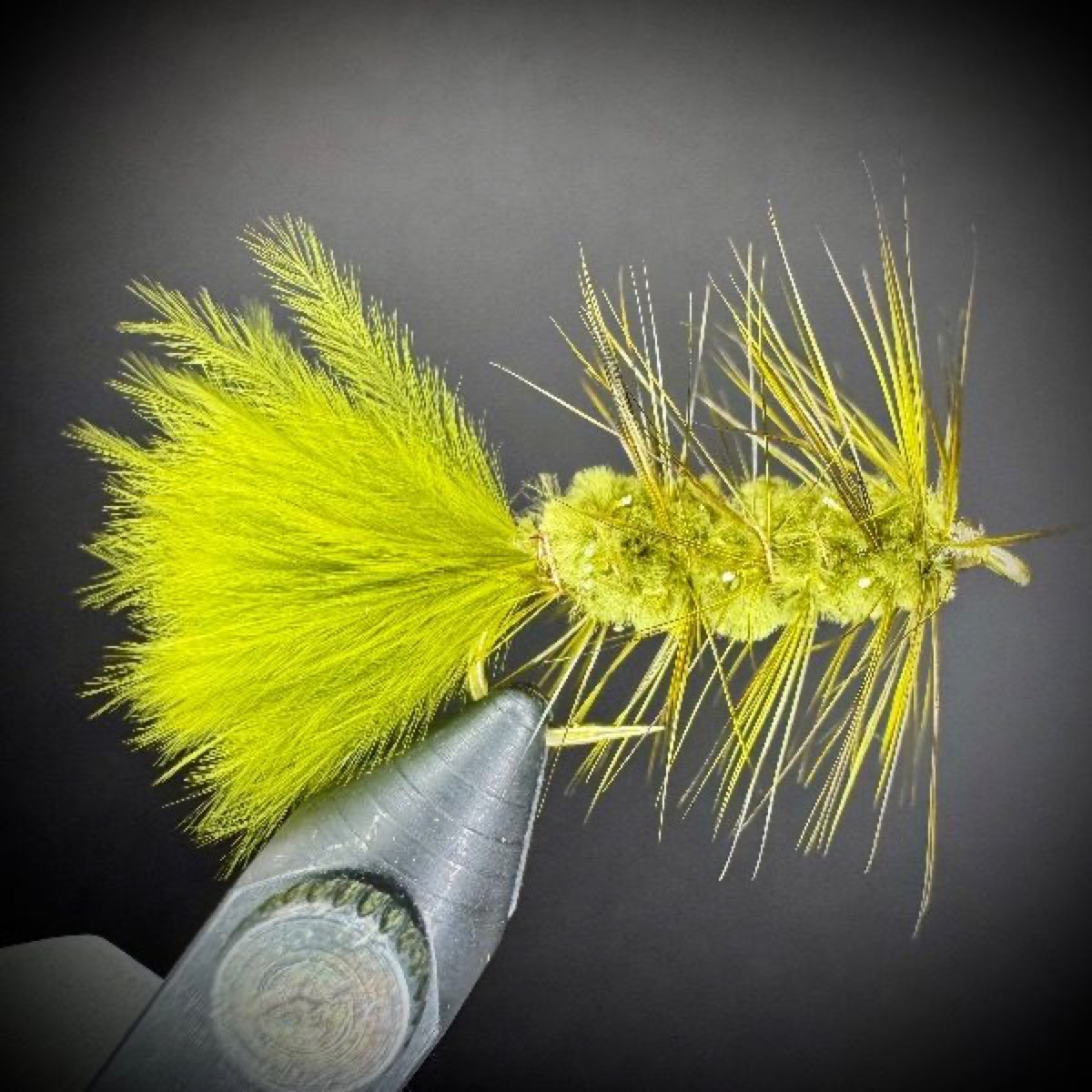
Woolly Bugger
Woolly Bugger recipe
| Hook | Mustad size 4 streamer (Sportsman’s Warehouse) |
|---|---|
| Thread | Semperfi nano silk olive 100D 6/0 (Wholesale Fly Co.) |
| Head | Large brass bead with built in eyes (facebook marketplace) |
| Tail | Olive marabou (Muskoka kit/Amazon) |
| Tail Flash | Pearl crystal flash (Amazon kit) |
| Rib | Copper wire (Goodwill find) |
| Body | Olive chenille (Amazon) |
| Hackle | Olive rooster hackle (Amazon kit) |
| Collar | Peacock crystal dubbing (Sent by Brent) |
About this fly
Place bead on hook and put in vice. Attach thread behind bead and run halfway down the shank, and remove tag end of thread and continue thread to where the barb would be. Tie in the olive marabou about the length of the shaft, then tie in the crystal flash making sure to position in places around the tail leaving just a bit longer than the tail. Tie in wire and olive chenille, and run the thread to just before the bead. Wrap chenille forward in touching wraps and tie off leaving small space behind the bead. Tie in the olive hackle feather by the butt of the stem (marabou like barbs removed), palmer hackle toward tail, holding in place at tail start counter wrapping copper wire (making sure to trap in your hackle feather) (this ties in the feather) and palmer forward and tie in and helicopter off excess wire. Use some peacock dubbing and place on thread and wrap behind the bead. Whip finish and glue!
What the Woolly Bugger imitates
- Woolly Bugger family
Where the Woolly Bugger came from
- Originated by Russell Blessing, 1967, Harrisburg, Pennsylvania. Tied for smallmouth bass to imitate a hellgrammite / Dobsonfly larva; the marabou tail added to a Woolly Worm base is what made it a Bugger.Source: Orvis News: Birth of the Woolly Bugger; Fly Life Magazine interview with Blessing's daughter
- Named by Julie Blessing, 1967, Harrisburg, Pennsylvania. Blessing's seven-year-old daughter named the fly on first seeing it.Source: Fly Life Magazine: Russell Blessing's Woolly Bugger (family interview)
- Derived from Woolly Worm. Evolved from the Woolly Worm, itself from the British palmer; Wikipedia adds that precise origin is unknown.Source: Wikipedia: Woolly Bugger
Where sources tell it differently, each account is listed with its own source.
Inside the vault every material on this fly opens to its own card, and you can save the fly to your own boxes.