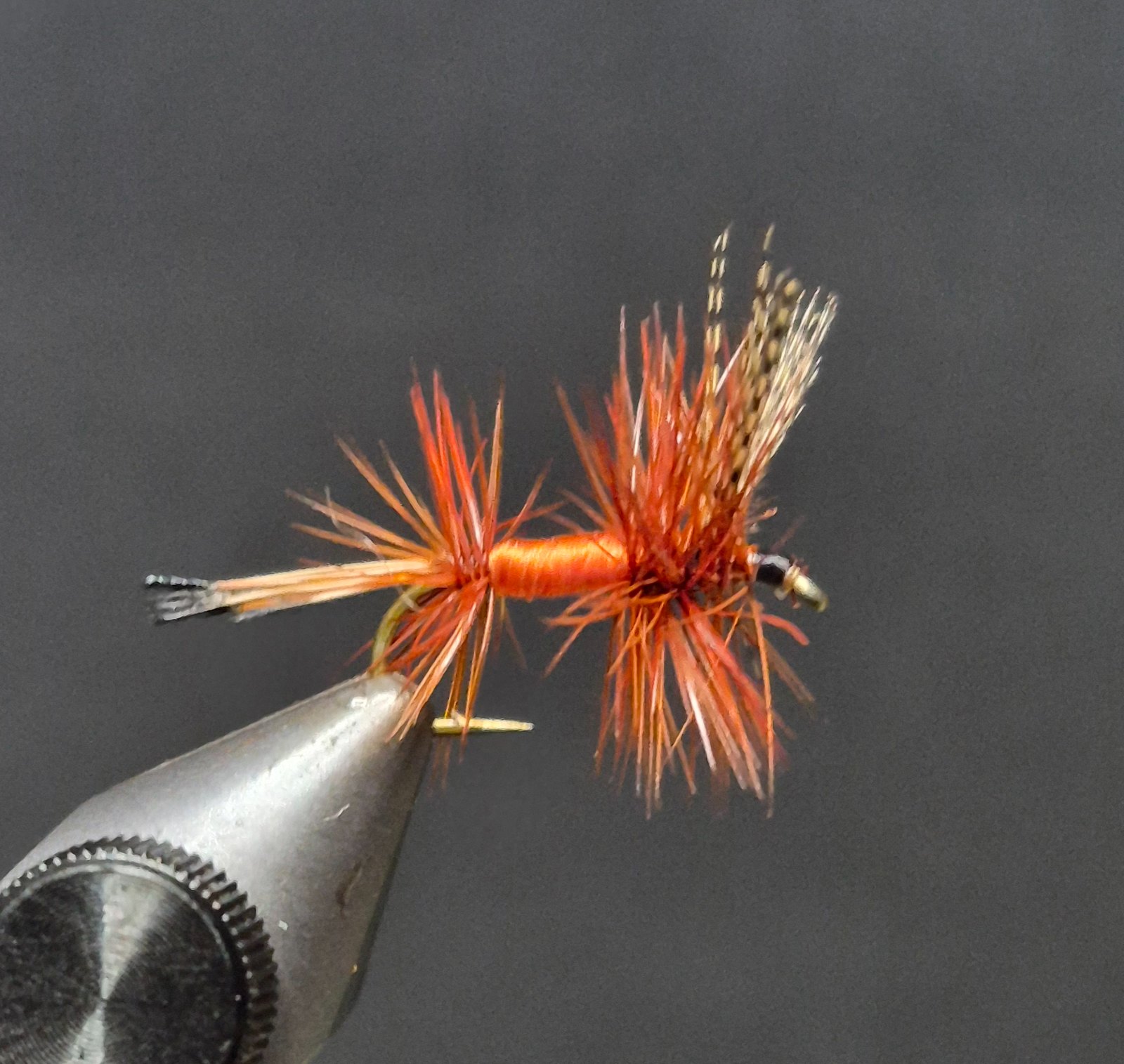
 FLY
FLY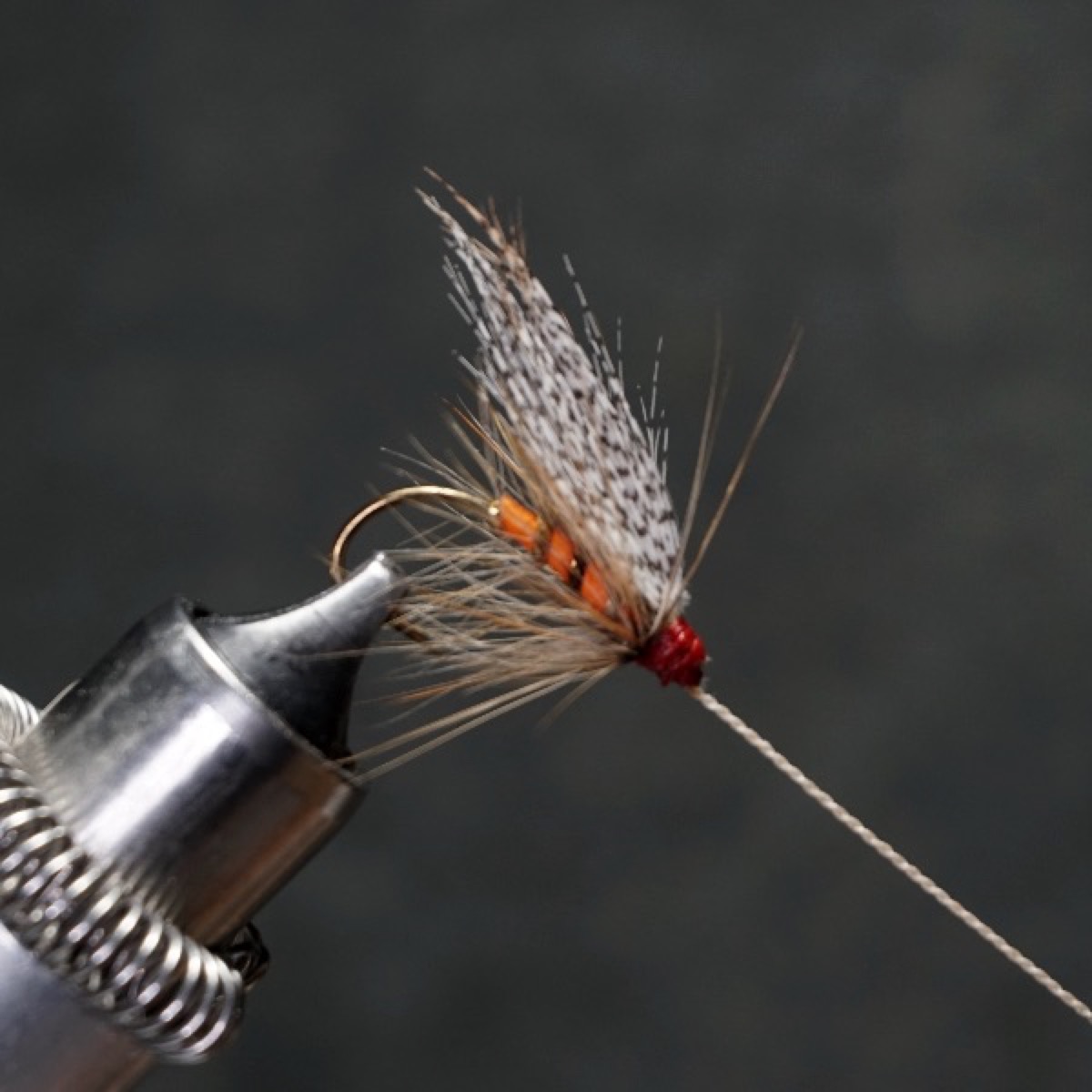
Classic Wet Fly
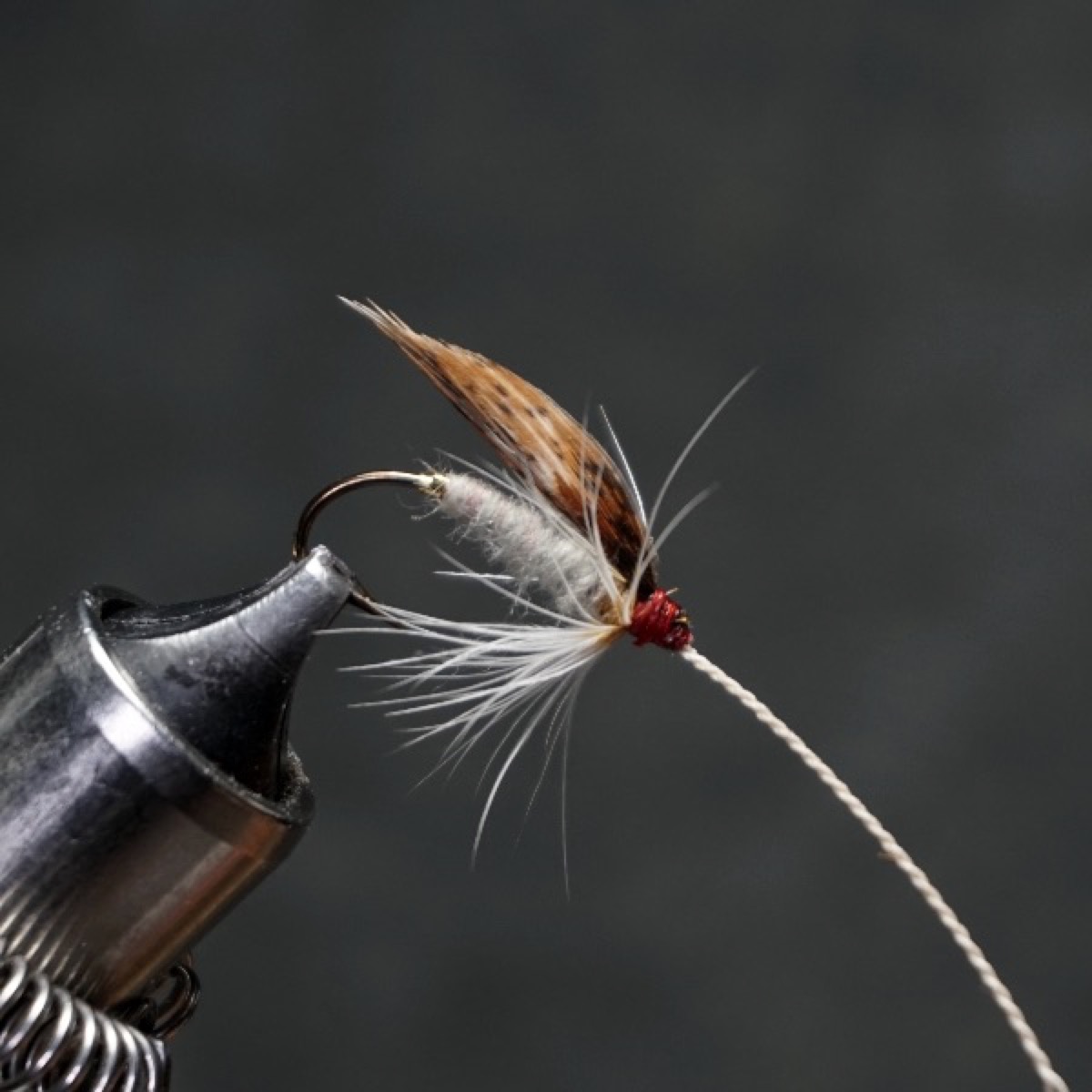
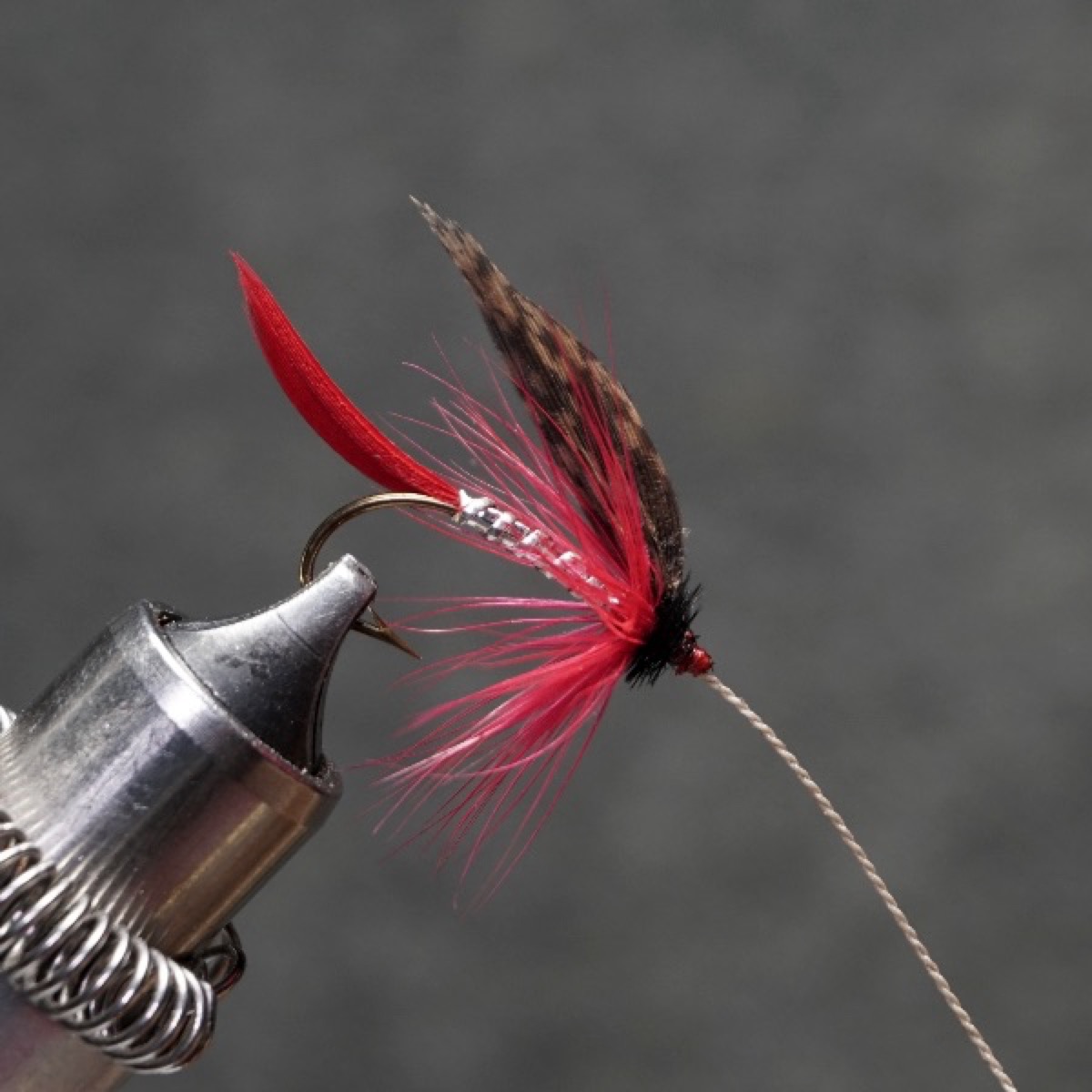
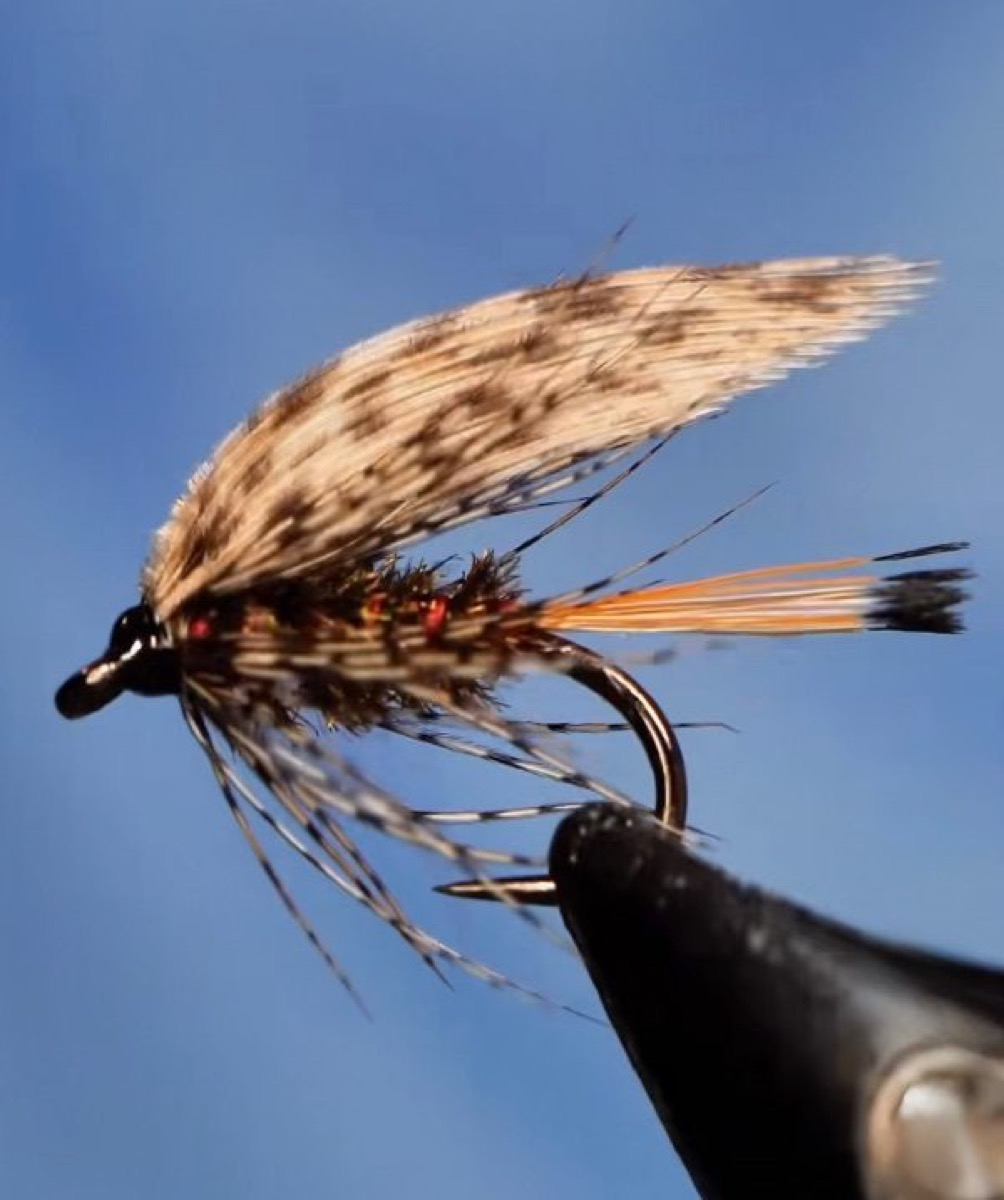
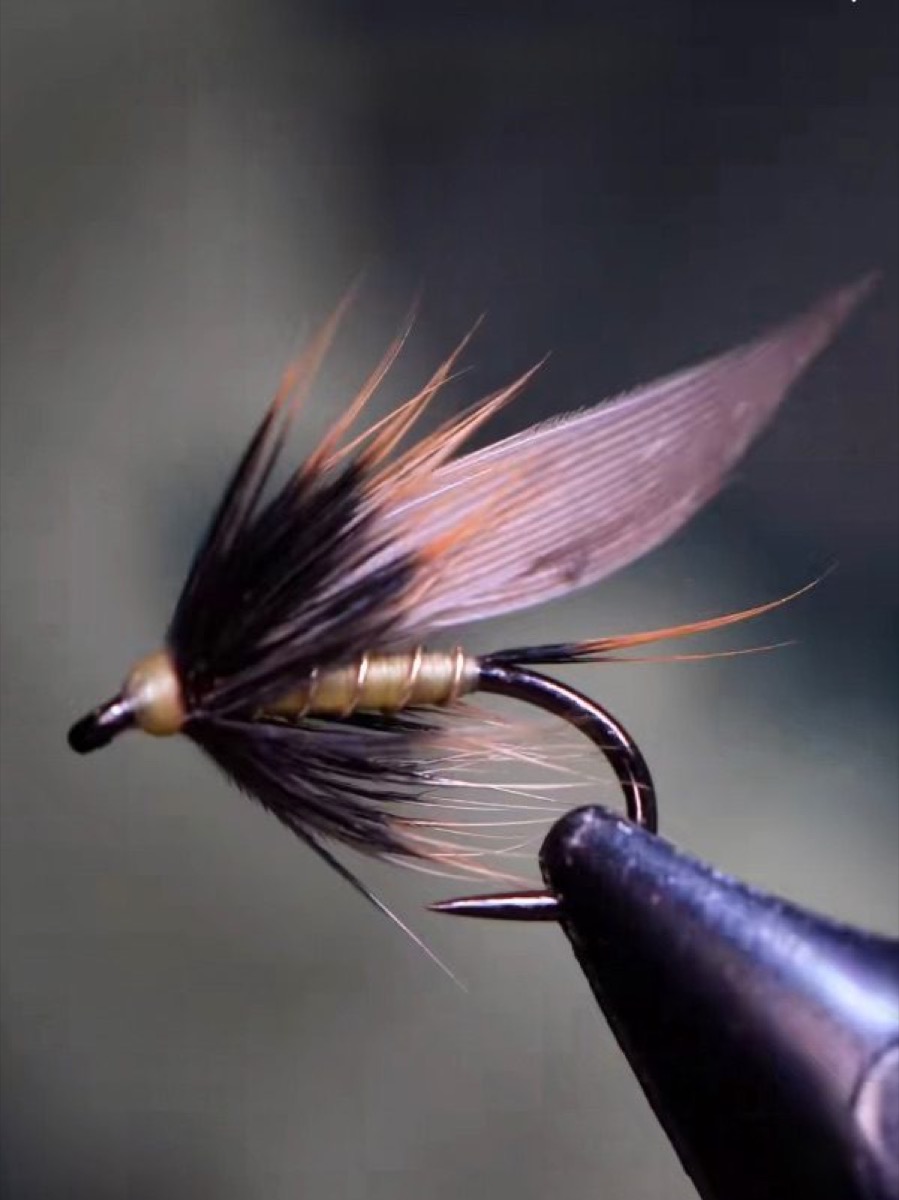
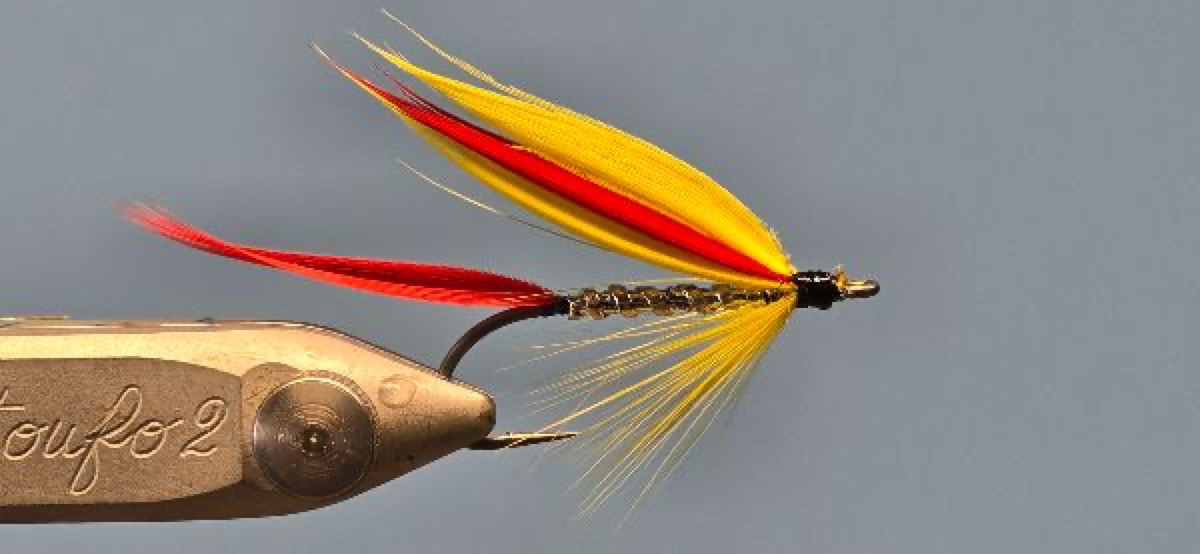
Queen of the Water
Tied by Christian Andrews
Queen of the Water recipe
| Hook | #6 sproat (blind and snelled) |
|---|---|
| Thread | red silk (or claret if head is not dark lacquered) |
| Rib | gold oval tinsel |
| Body Hackle | short ginger, palmered |
| Body | orange floss |
| Hackle | ginger rooster saddle, tied wet style |
| Wing | rolled mallard flank |
About this fly
Queen of the Water: from Famous Flies and Their Histories (1892) by Mary Orvis Marbury
What the Queen of the Water imitates
- Fancy / attractor (imitates nothing specific)
Where the Queen of the Water came from
- Originated by James Wilson, Scotland. Credited jointly with his brother John; Marbury gives no firm single originator. / States Queen of the Waters originated with zoologist James Wilson.Source: Marbury, Favorite Flies and Their Histories (1892), p.351 | The Professor: A Fly History (MidCurrent, Fred Klein)
- Originated by John and James Wilson, Scotland. Says John Wilson and his brother James are both credited with creating the Queen of the Waters.Source: Professor (Don Bastian Wet Flies)
- Originated by John Wilson (Christopher North), Scotland. Credited to both Prof. John Wilson and his brother, naturalist Prof. James Wilson.Source: Marbury, Favorite Flies and Their Histories (1892), p.351
- Derived from Professor. Marbury presumes (only if the Professor was first tied without ibis) that the Queen of the Water and the Professor are variations of one original fly that later became distinct patterns.Source: Marbury, Favorite Flies and Their Histories (1892), p.351
Where sources tell it differently, each account is listed with its own source.
In the old books
Original dressing as pictured in Marbury, Favorite Flies and Their Histories (1892), Plate T, No. 195. The photo above is a later tie, not the original.
Inside the vault every material on this fly opens to its own card, and you can save the fly to your own boxes.