 FLY
FLY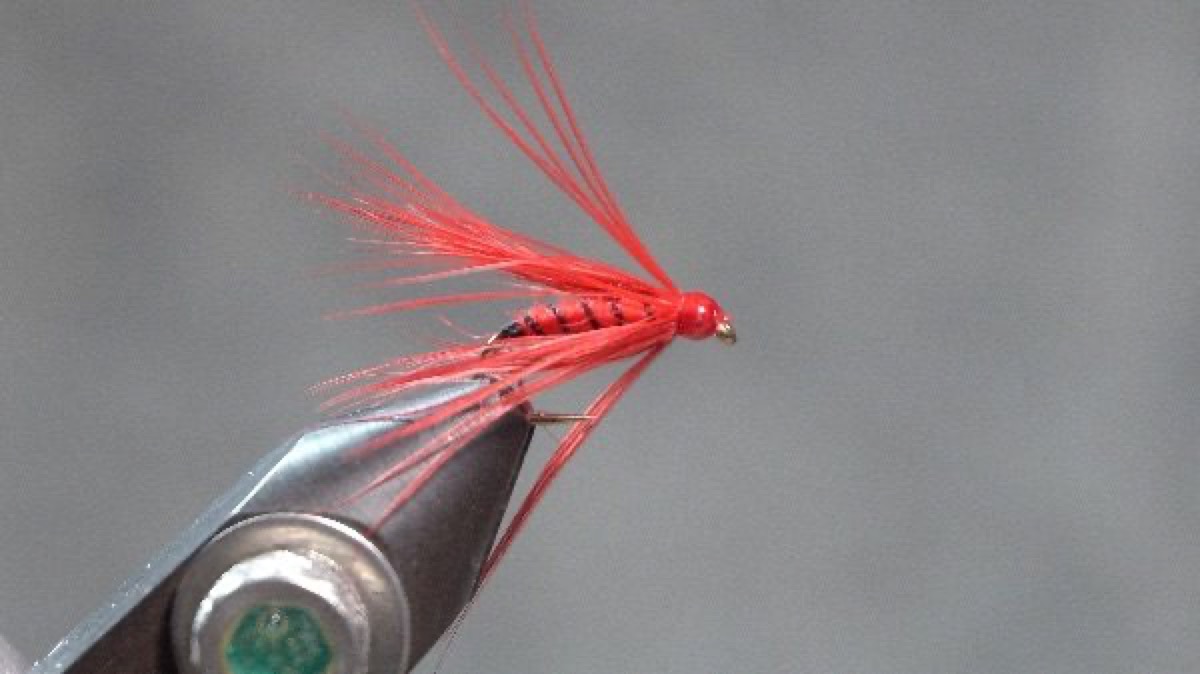
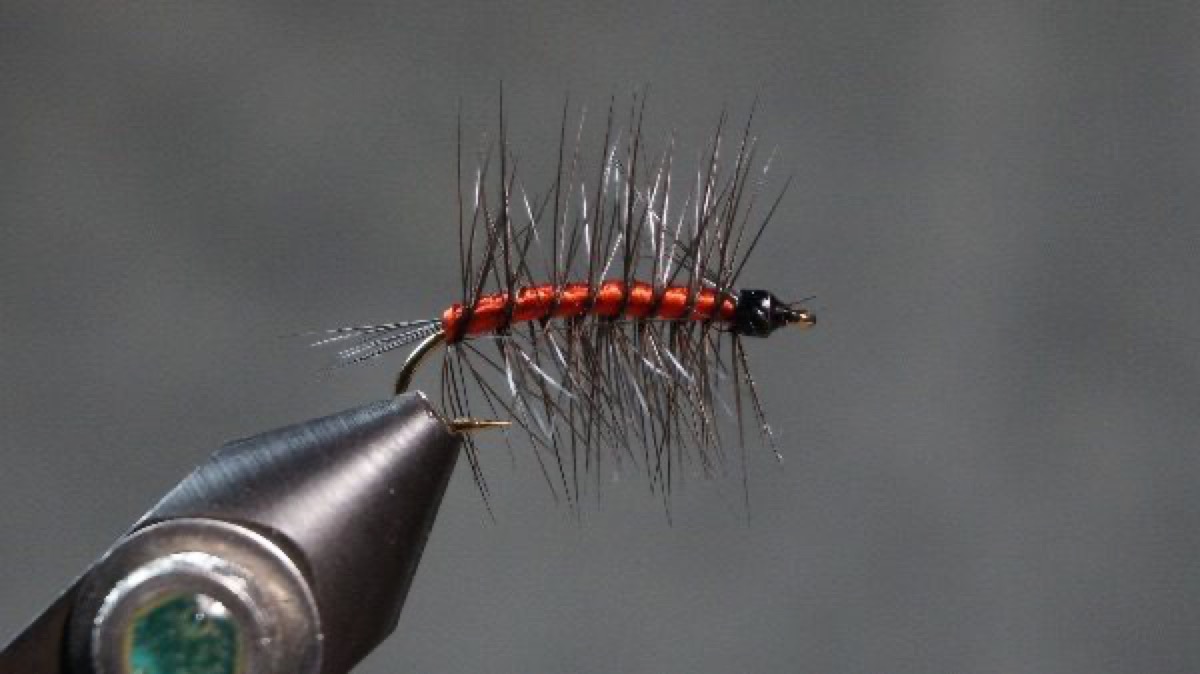
Scarlet Hackle
Scarlet Hackle recipe
| Hook | # 12-18 nymph / wet |
|---|---|
| Thread | red |
| Rib | Black silk thread |
| Body | red: wool, dubbing, yarn, floss |
| Front Hackle | red: hen soft, or full dry |
About this fly
This fly is from the illustration by Charles Orvis in Favorite Flies and Their Histories by Mary Orvis Marbury. In the attached video and in the recipe here, it is tied as a soft hackle wet fly; it could just as easily be tied as a dry fly emerger. There is no recipe in Mary Marbury’s book, except for the general recipe for the Red Hackle which does use black silk thread for the rib and red wool for the body. Lay down a base of red threadTie in a black silk thread to be used as the ribTie in a stand of red floss at hook bend and touching wrap forward; tie off, trimORDub a red wool or red dubbing bodyCounter spiral wrap the silk thread over the body to create the segmented lookTie in a red hackle feather (soft hackle for a wet hackle or dry hackle for a dry fly) 1 to 1.5 eye lengths behind eye; wrap hackle to desired thickness; catch in stem, clip out stemThread wrap a head; tie off; head cement
What the Scarlet Hackle imitates
- Soft hackle / North Country spider / flymph / wet fly
Where the Scarlet Hackle came from
- Originated by unknown. Pictured among Orvis hackles on Plate A; no history or originator given.Source: Marbury, Favorite Flies and Their Histories (1892), Plate A no.6
In the old books
Original dressing as pictured in Marbury, Favorite Flies and Their Histories (1892), Plate A, No. 6. The photo above is a later tie, not the original.
Inside the vault every material on this fly opens to its own card, and you can save the fly to your own boxes.