 FLY
FLY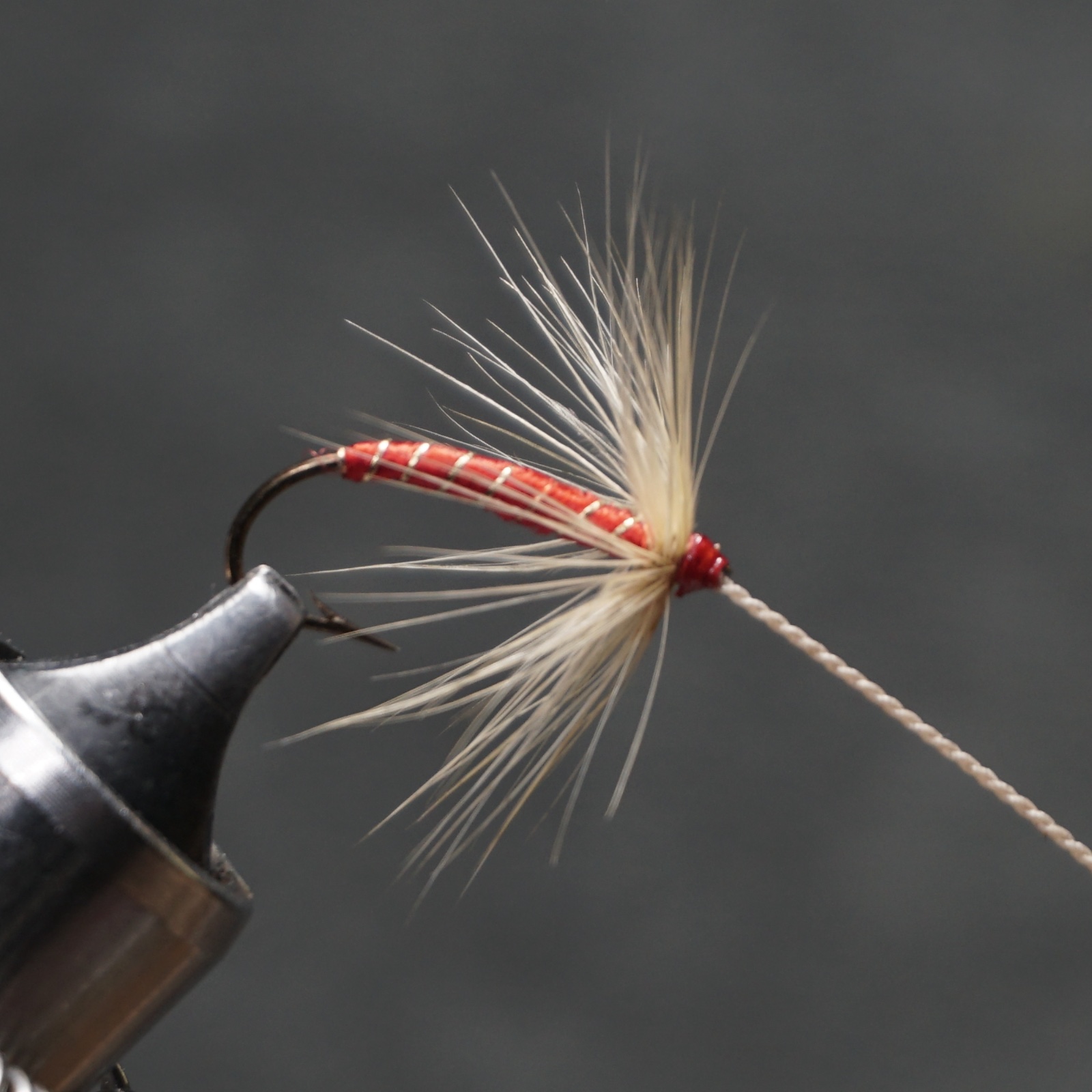
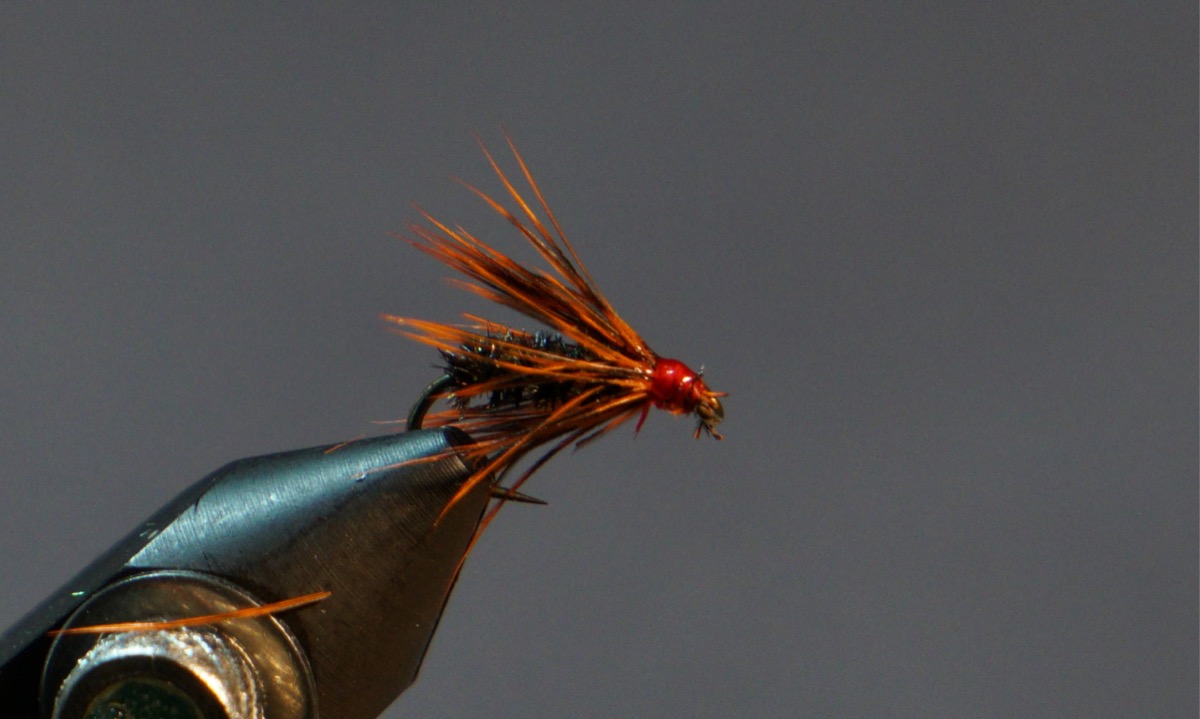
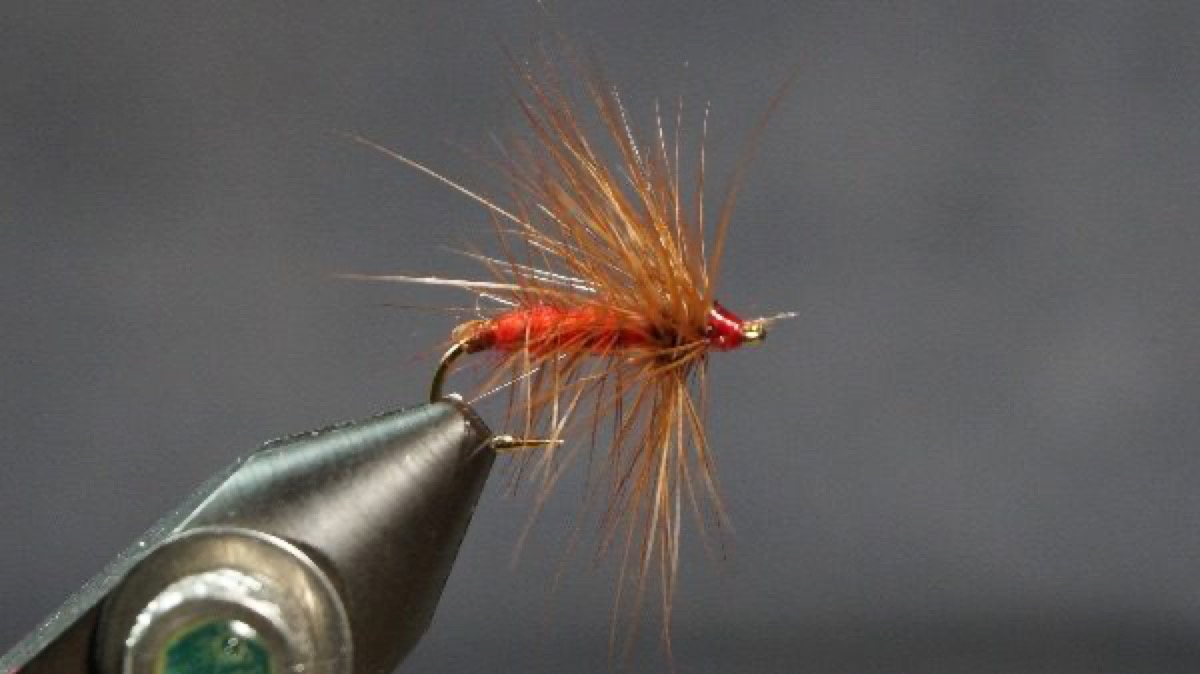
Red Hackle
Red Hackle recipe
| Hook | #14 dry |
|---|---|
| Thread | red |
| Rib | black silk (black floss) |
| Body | red wool |
| Hackle | brown dry |
About this fly
This is the Red Hackle from Favorite Flies and Their Histories by Mary Orvis Marbury, 1892 Choose a dry fly hook of desired size: there is no specific recipe in Marbury’s bookLay down a base of red thread (because the head will be red)Tie in the black floss for the ribTie in a strand of red wool yarn (or dubb a red wool body); touching wrap the body back to at least an eye length behind the eye; tie off and clipSpiral wrap the back floss to create the rib; tie off and clipTie in a brown dry fly hackle; wrap four or five times; tie off and clipWrap a thread head; whip finish; head cement
Where the Red Hackle came from
- Described by Izaak Walton, 1653, England. Early printed red-bodied palmer/hackle in vault.Source: Walton & Cotton, The Complete Angler (vault edition), p.124 palmer-fly (red body variant)
- Described by Aelian, Macedonia. Third-century AD account; equating it with the Red Hackle is Marbury's reading.Source: Marbury, Favorite Flies and Their Histories (1892), pp.30-31 quoting Aelian, De Animalium Natura XV.1
- Originated by unknown, Macedonia (Astraeus river). Marbury reads Aelian's red-wool and cock-feather lure as the first recorded red hackle.Source: Marbury, Favorite Flies and Their Histories (1892), pp.28-31 'History of the Red Hackle'
Where sources tell it differently, each account is listed with its own source.
In the old books
Original dressing as pictured in Marbury, Favorite Flies and Their Histories (1892), Plate A, No. 1. The photo above is a later tie, not the original.
Inside the vault every material on this fly opens to its own card, and you can save the fly to your own boxes.