 FLY
FLY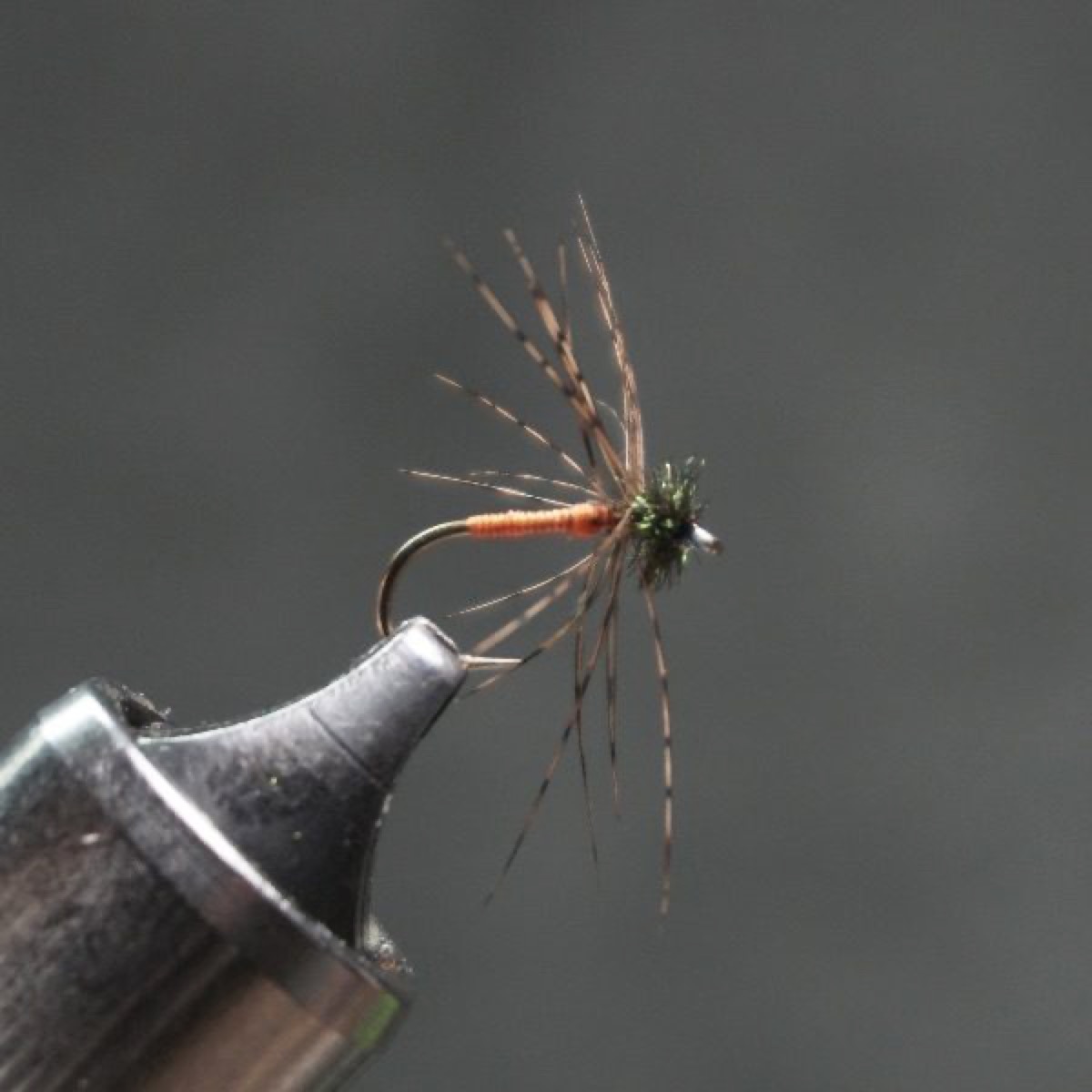
Spiders
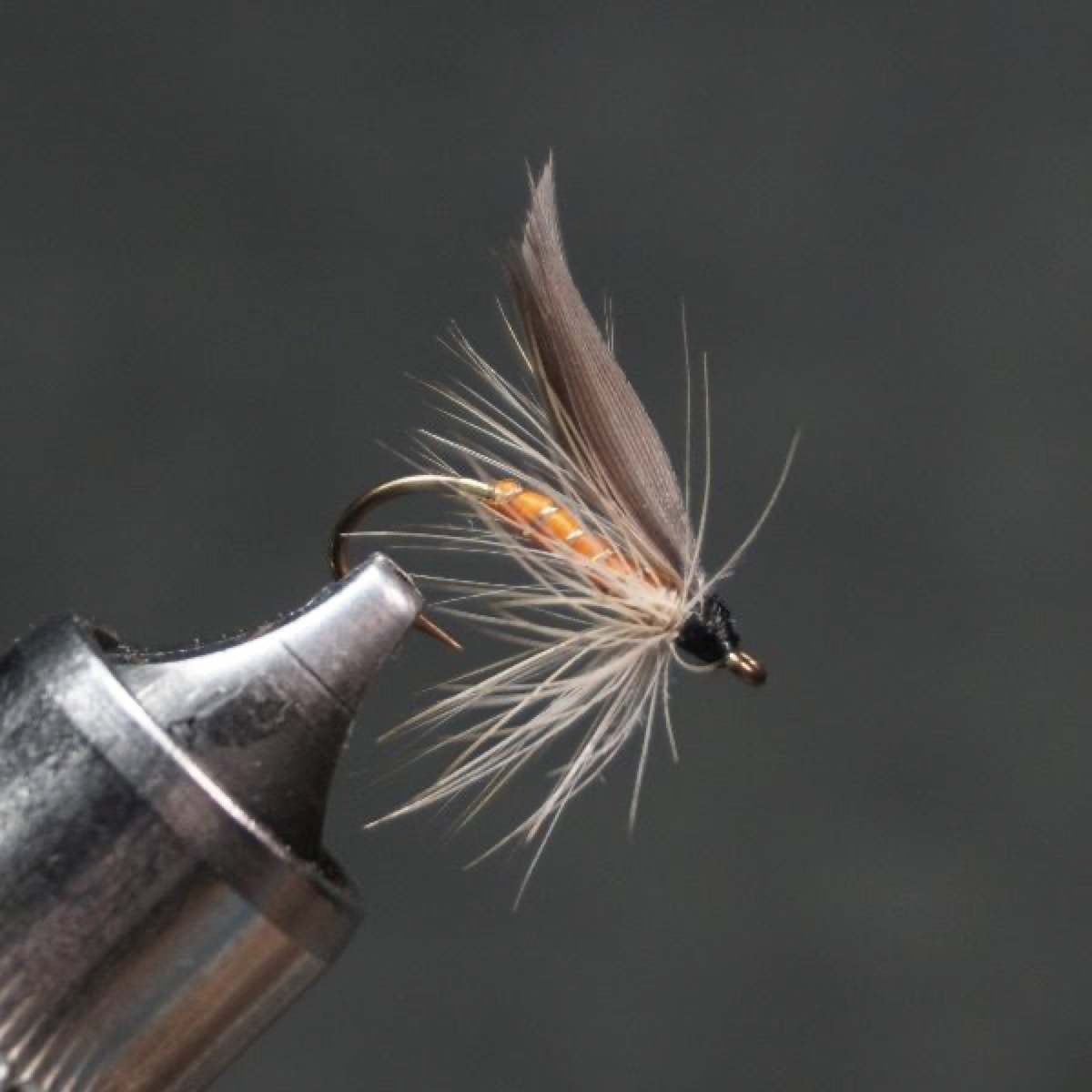
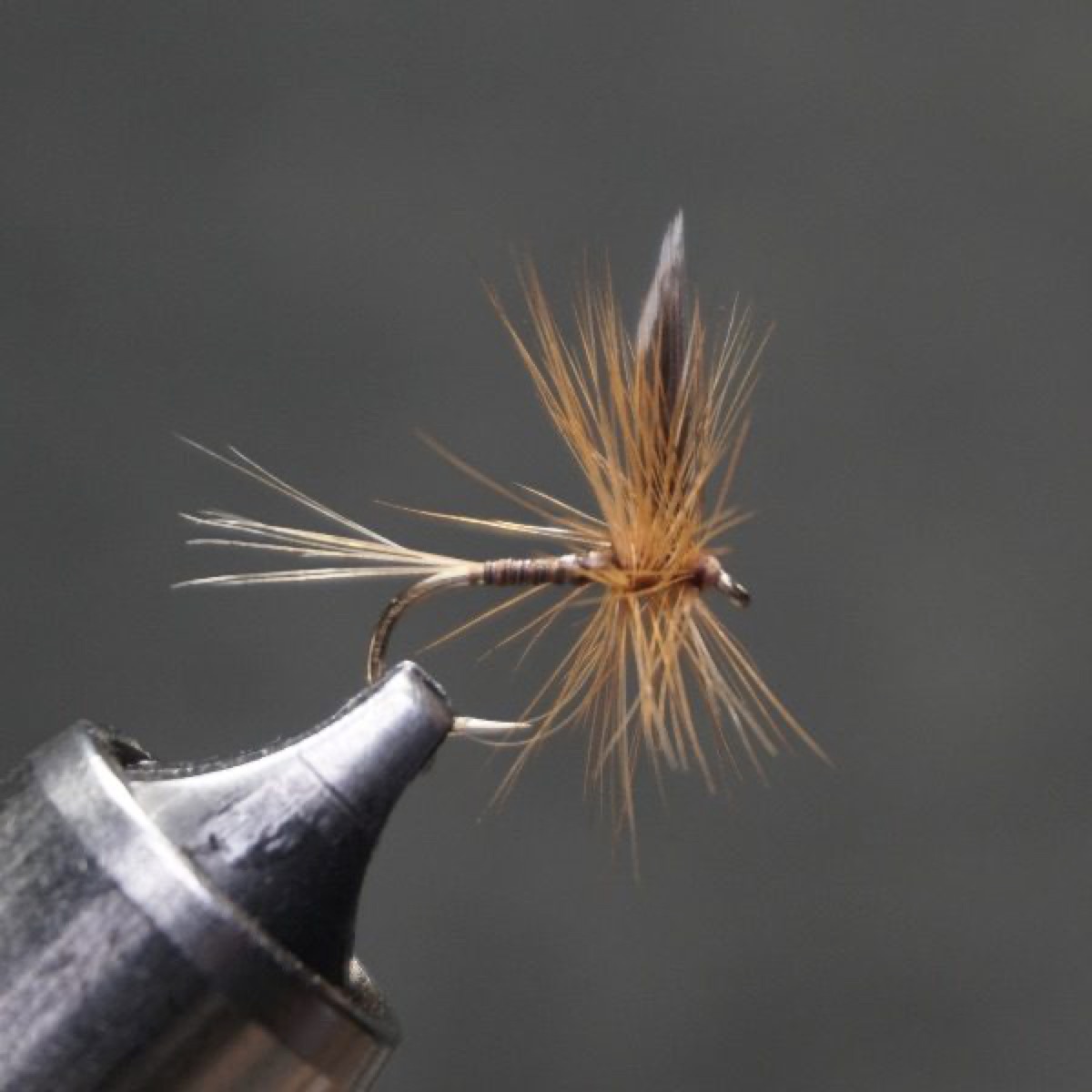
Brown Watchet
Tied by Christian Andrews
Brown Watchet recipe
| Hook | #14 fine wire |
|---|---|
| Thread | orange silk, waxed |
| Head | Peacock herl |
| Hackle | Partridge back |
| Body | orange silk, waxed |
About this fly
T. E. Pritt’s No. 31 Tie in and wrap herl head. Tie in hackle right behind head. Wrap and tie off on bend side of hook. Pulling the hackle forward over the head makes tying off and wrapping the body cleaner. Wrap down and back on shank to above between the point and barb. Whip finish behind hackle. Pull hackle back over hook shank.
What the Brown Watchet imitates
- Mayfly dun (adult dry)
- Turkey Brown (emerger) Paraleptophlebia submarginata
Where the Brown Watchet came from
- Described by John Turton, 1836, Yorkshire. Also called Orange Brown; wren tail hackle, orange silk, peacock head.Source: Turton, The Angler's Manual (1836), pp.15-16 No.3
- Described by J. Wells, 1842, Wharfedale. Partridge back, orange body, peacock head; list credited to an old Wharfedale angler.Source: Wells, The Contemplative and Practical Angler (1842), p.55 Wharfdale list No.10
- Described by T.E. Pritt, 1885, Yorkshire. Says it is practically the same as the Orange Partridge.Source: Pritt, Yorkshire Trout Flies (1885), p.32 No.31
- Originated by unknown, Yorkshire. North Country hackle fly; no inventor.Source: Turton, The Angler's Manual (1836), pp.15-16 No.3
Where sources tell it differently, each account is listed with its own source.
In the old books
Original dressing as pictured in Pritt, North-Country Flies (1886), Plate 6, No. 31. The photo above is a later tie, not the original.
Inside the vault every material on this fly opens to its own card, and you can save the fly to your own boxes.