 FLY
FLY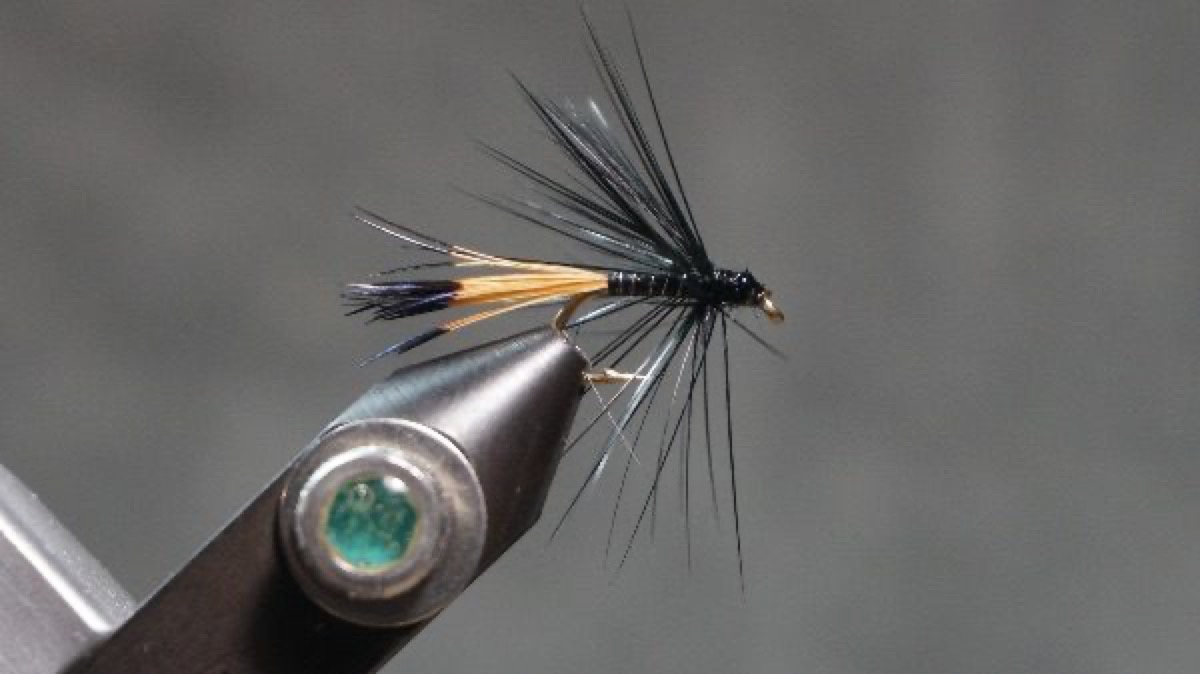
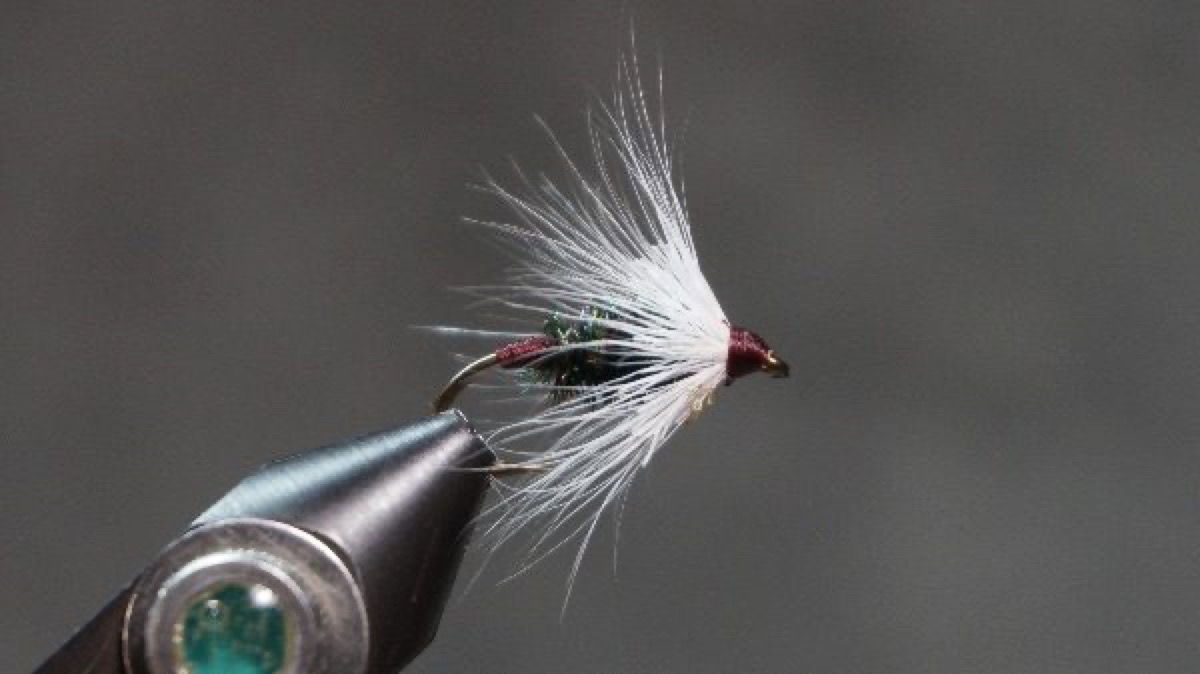
Black Pennell
Black Pennell recipe
| Hook | #12 - 14 wet / nymph |
|---|---|
| Thread | black |
| Tail | Golden Pheasant tippet |
| Rib | silver wire |
| Body | black thread |
| Front Hackle | stiff black (but it’s a wet fly) 2x gape |
About this fly
Mary Orvis Marbury has the brown, green, and yellow pennell illustrated by her father Charles Orvis in her book Favorite Flies and Their Histories (1892). It is possible she did not include the Black Pennell because H. Cholmondeley-Pennell himself said the best colors (or maybe that’s “colours") to fish are brown, green, and yellow. Notes: The body is firm and slim, just thread wraps.The front hackle is sparse, per Cholmondeley-Pennell’s description, slightly longer to 2x the hook gape. The fly can be tied in the colors he preferred: brown, green, and yellow. Per the illustrations by both H. Cholmondeley-Pennell and Charles Orvis, the tail, body, and hackle on these are the named color. There is no rib in the illustrations.
Where the Black Pennell came from
- Described by Edward Hamilton, Britain. Notes Pennell's idea that three hackle flies suffice for trout.Source: Hamilton, Recollections of Fly Fishing for Salmon, Trout and Grayling
- Described by H. Cholmondeley-Pennell. Pennell proposed a few typical hackle flies to replace all others; Marbury pictures yellow, brown, green Pennells.Source: Marbury, Favorite Flies and Their Histories (1892), p.35 quoting Pennell, The Modern Practical Angler
- Originated by H. Cholmondeley-Pennell, England. Devised in the 19th century as part of his lightly dressed hackle series.Source: Fly Anglers OnLine, Old Flies: Black Pennell (citing Smedley; John Gray)
Where sources tell it differently, each account is listed with its own source.
Inside the vault every material on this fly opens to its own card, and you can save the fly to your own boxes.