 FLY
FLY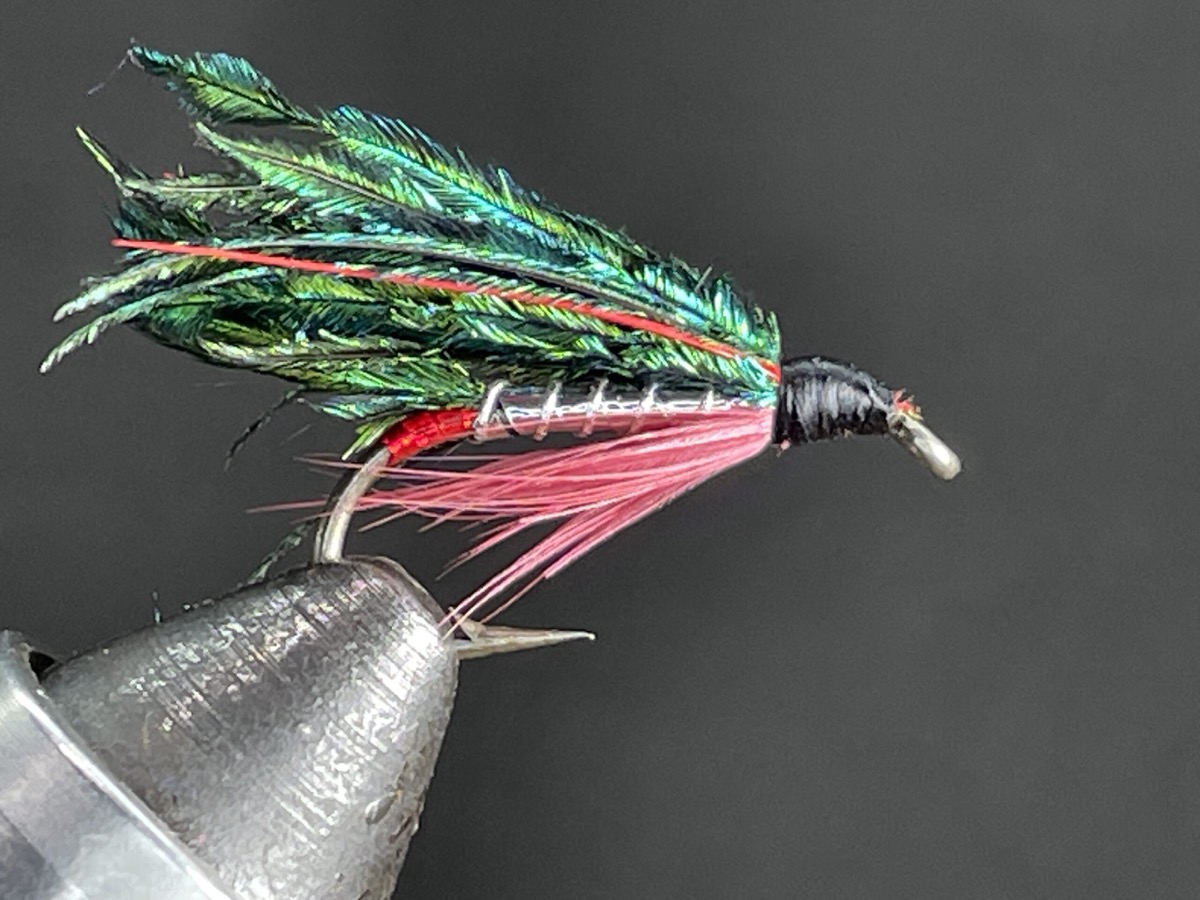
Wet Fly
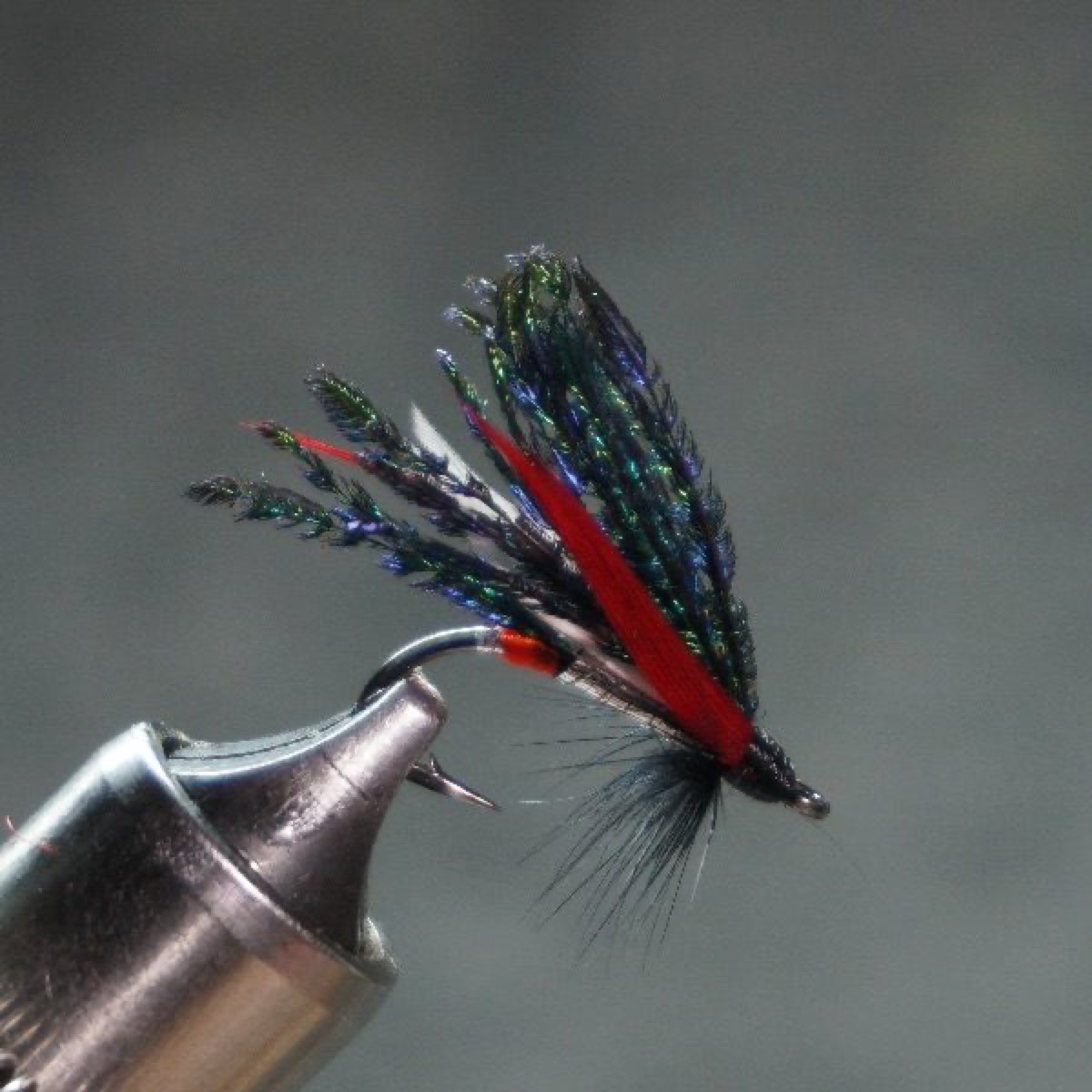
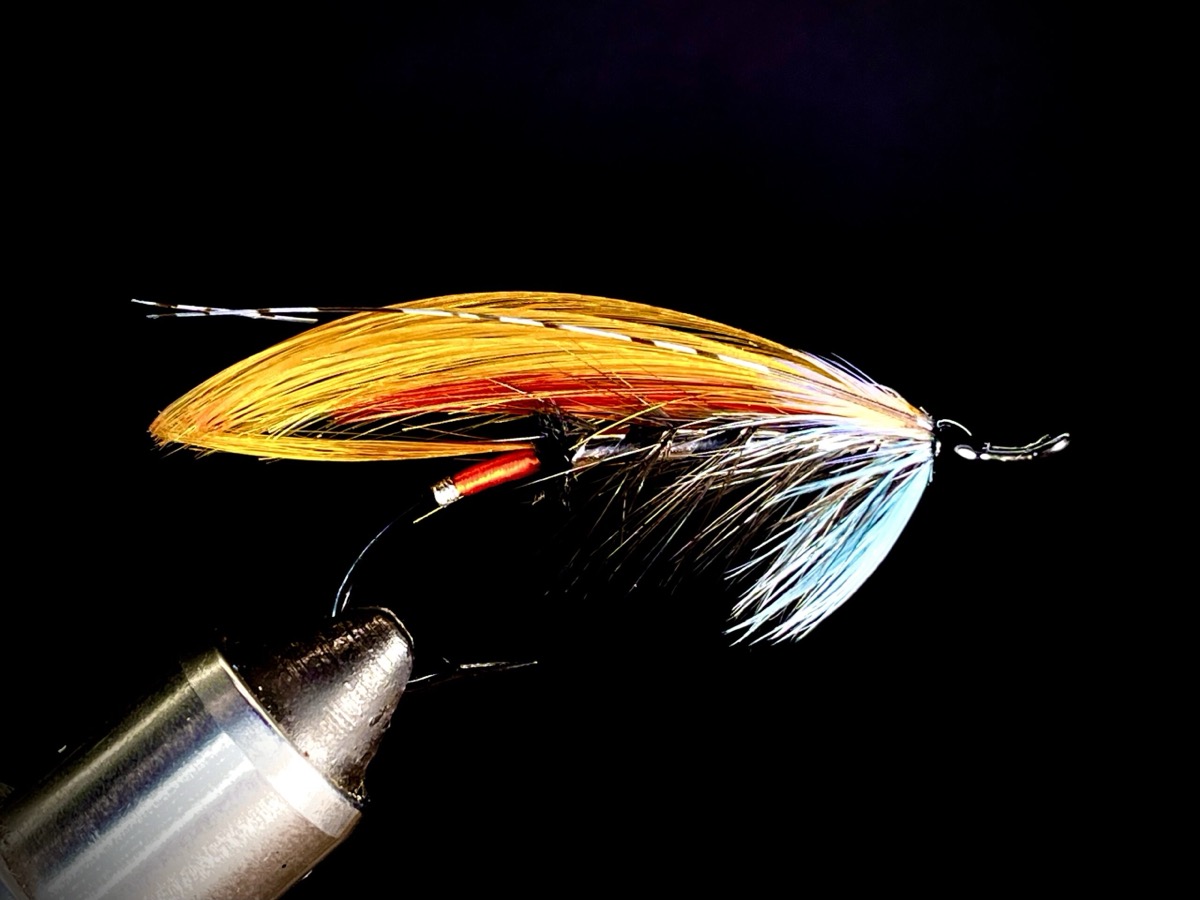
Alexandra
Tied by Brent Jones
Alexandra recipe
| Hook | Partridge Model A |
|---|---|
| Thread | Uni 8/0 black |
| Tag | UTC holographic red tinsel |
| Tail | Peacock Sword |
| Rib | Uni French Small Silver Oval Tinsel |
| Body | UTC Large Silver Flat Tinsel |
| Wing | Peacock Sword |
| Horns | Red Mallard |
| Throat | Wine Colored Hen |
| Head | Thread |
What the Alexandra imitates
- Fancy / attractor (imitates nothing specific)
- Salmon / steelhead classic wet (floss, tinsel, hackle)
Where the Alexandra came from
- Originated by unnamed narrator quoted in Kelson, 1848, Britain. Quoted narrator says he introduced the 'Alexandra fly' in 1848; speaker identity unclear.Source: Kelson, The Salmon Fly (1895), pp.261-262
- Originated by Dr. Hobbs, England. Marbury: invented by Dr. Hobbs some years before; it came into great favour in England and was believed to be so taking that its use was forbidden on some streams. Named after Princess Alexandra.Source: Marbury, Favorite Flies and Their Histories (1892), p.139 No.36
- Named by General Gerald Goodlake, England. First named 'Lady of the Lake' by Goodlake, later renamed for Princess Alexandra.Source: Marbury, Favorite Flies and Their Histories (1892), p.139 No.36
- Named by Major William Greer Turle, England. Credited with renaming it Alexandra after the Princess of Wales.Source: Wikipedia: Alexandra (wet fly)
- Originated by unknown, Scotland. 1860s by an unknown angler of Scottish origin, as Lady of the Lake.Source: Wikipedia: Alexandra (wet fly), citing Bates, Streamer Fly Tying and Fishing (1966), p.217
Where sources tell it differently, each account is listed with its own source.
In the old books
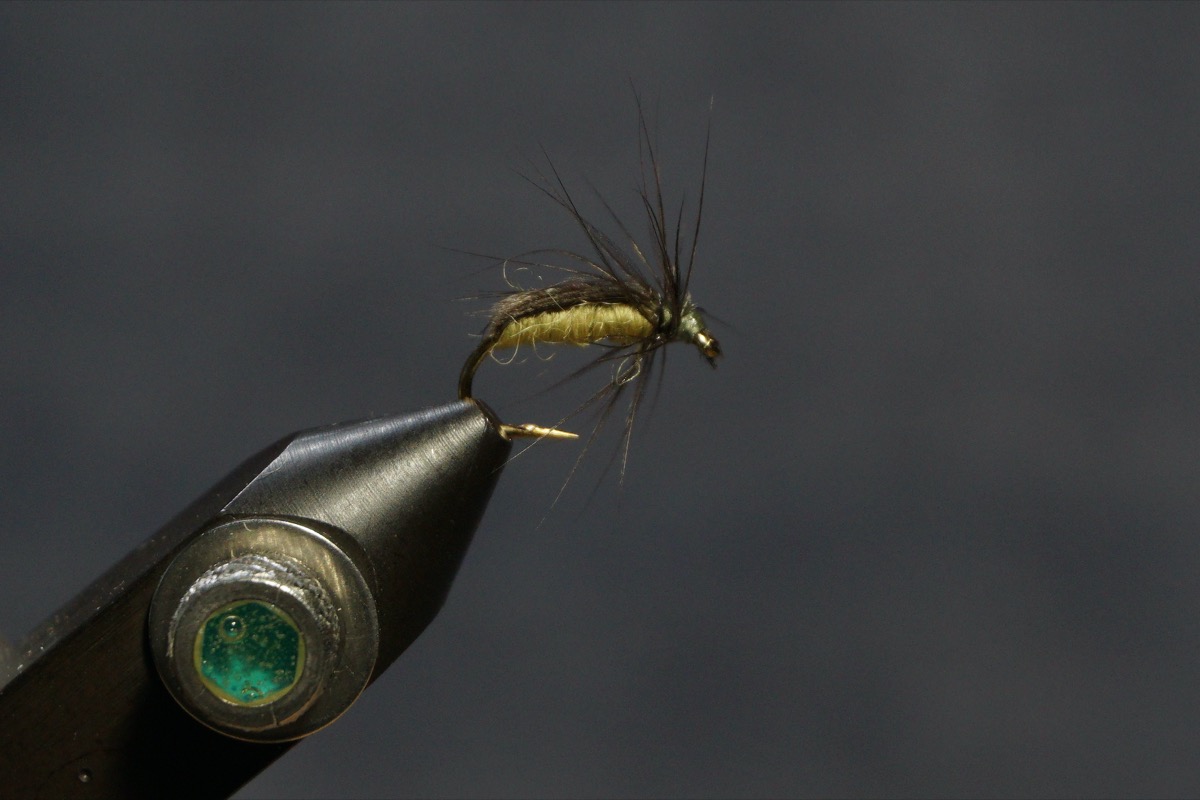
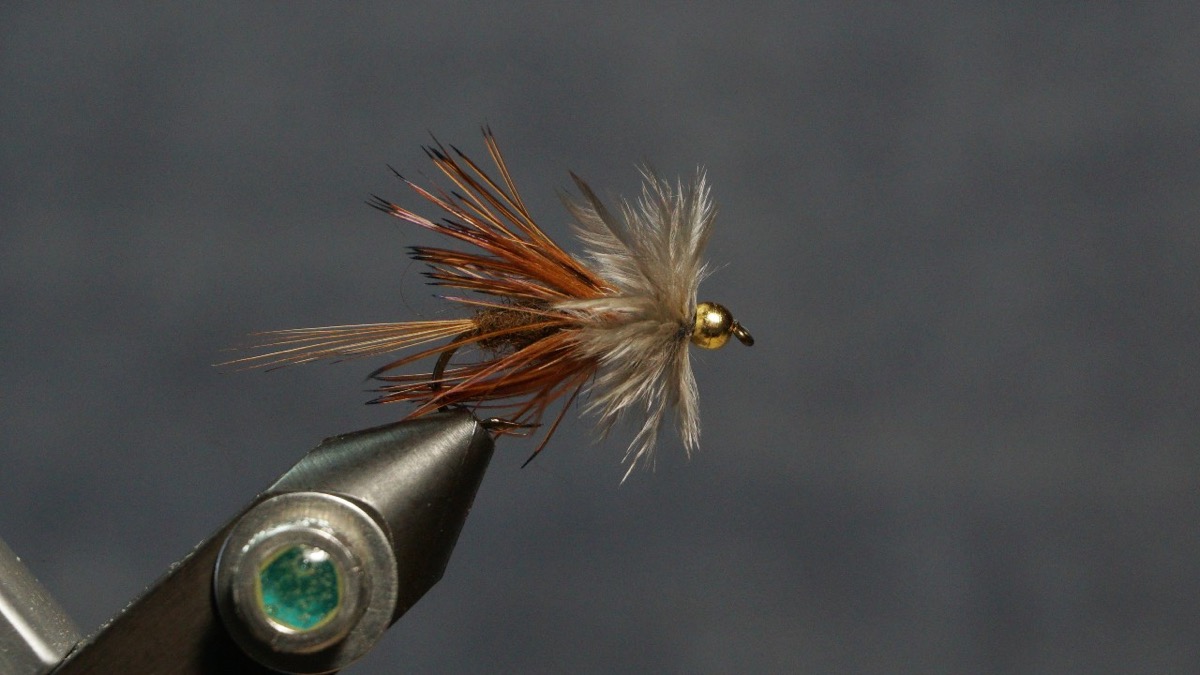
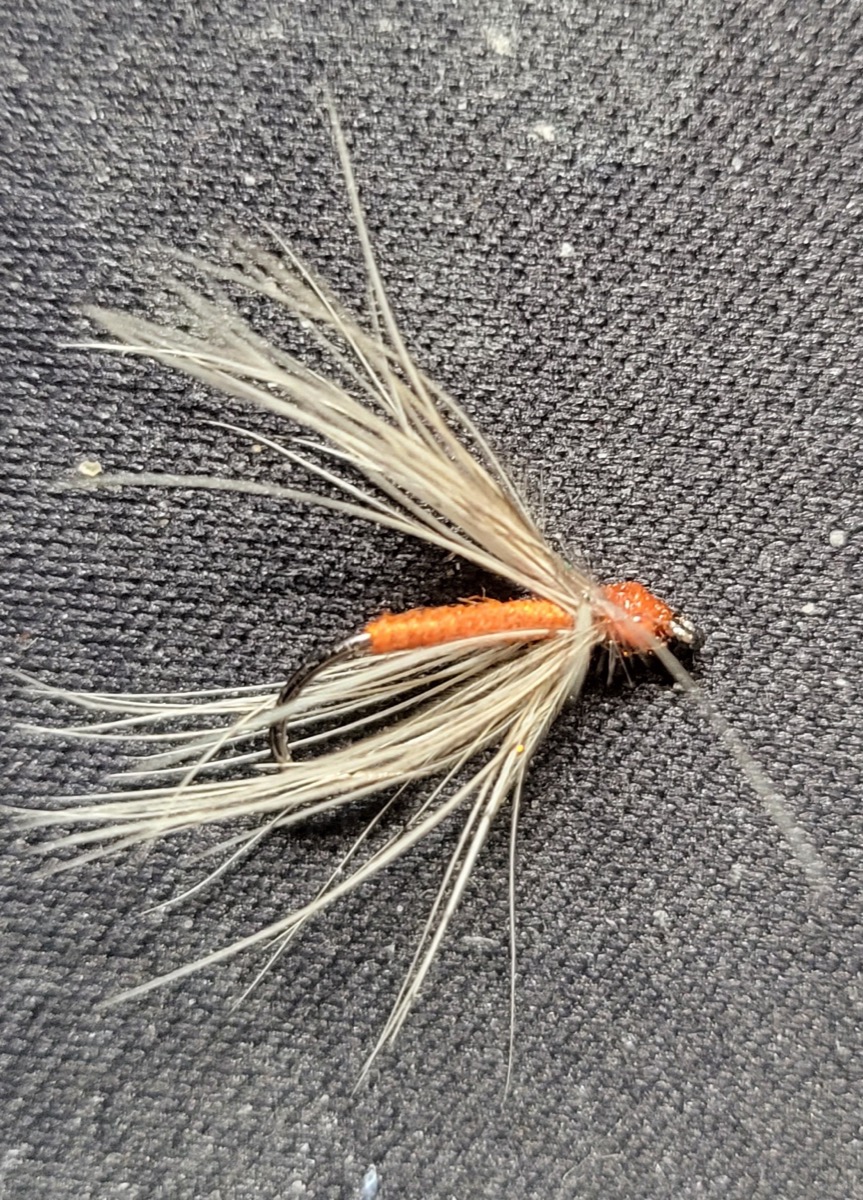
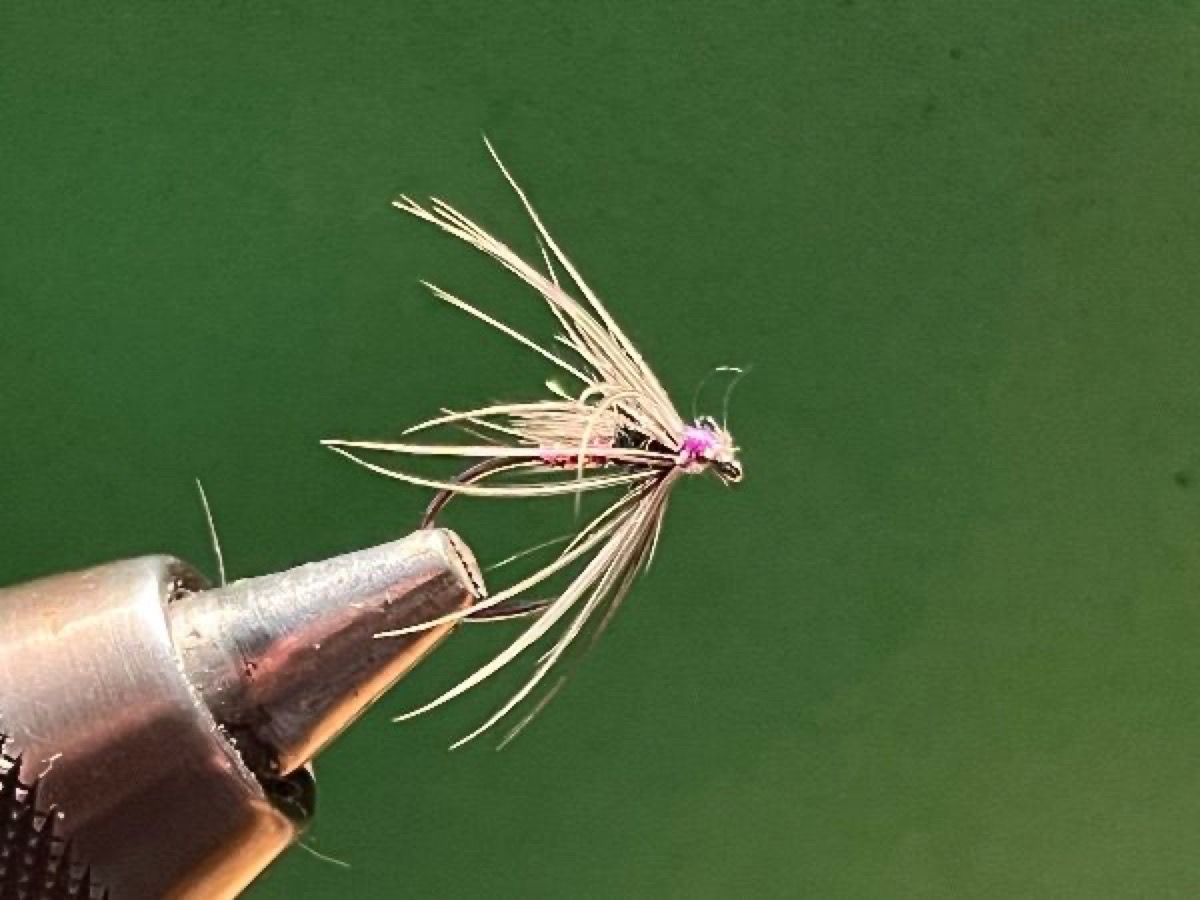
Original dressing as pictured in Marbury, Favorite Flies and Their Histories (1892), Plate E, No. 36. The photo above is a later tie, not the original.
Inside the vault every material on this fly opens to its own card, and you can save the fly to your own boxes.