 FLY
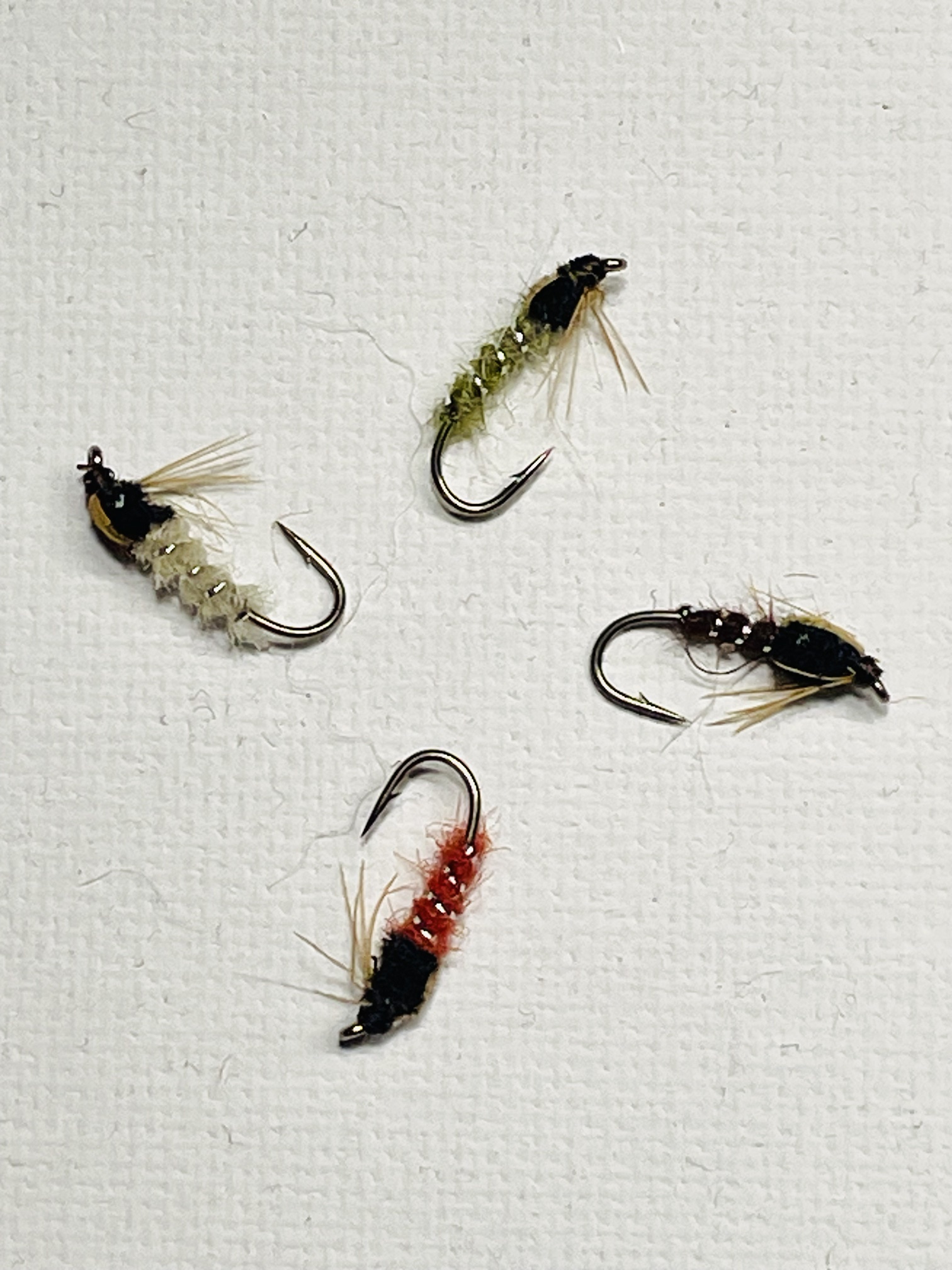
The Sedge Edge: Goddard's Take on the Caddis Pupa (Trichoptera)
By Brent Jones · 2026-11-15 · In the Vault
A little history
Mention John Goddard and most tyers think of one fly first: the Goddard Caddis, spun and clipped from deer hair. In Britain, where caddisflies are called sedges, it's known as the G&H Sedge, after Goddard and his friend Cliff Henry. But Goddard also tied for the caddis below the surface, and his Sedge Pupa is what we'll be exploring here.
As Mike Dawes puts it in The Flytier's Manual, Goddard "originally tied [it] in the late 1950s to imitate the pupal stage of the Sedge found in great numbers in the stomachs of the trout at Blagdon and Chew." Dawes notes it is most effective from midsummer onwards, and that it was tied in four basic colours: orange, green, brown and cream.
Four colours, four groups of sedge
I'll admit I'm working at a bit of a handicap here. Missouri is more than 4,000 miles from the reservoirs of Somerset, and I've never fished Blagdon or Chew. But that hasn't stopped me digging into what I find to be a fascinating little fly. Not because of its complexity, but because of its simplicity. As many tyers know, a great pattern can be adapted to a whole range of similar insects with nothing more than a change of dubbing colour. Goddard did exactly that here.
So I put on the detective cap and started with the reservoirs. Blagdon and Chew Valley Lake sit a few miles apart in North Somerset, just south of Bristol. Chew is known for trout feeding below the surface on caddis larvae and pupae, and a survey of both lakes in the late 1960s and early 70s found Blagdon the richer of the two in shoreline insect life.
Goddard wasn't the first to tie for the sedges on these waters. Before him, Dr H. A. Bell fished Blagdon with his Amber Nymph, a sedge pupa pattern. Bell made a habit of spooning every trout he caught, keeping an index of what he found, and tying imitations of it, the same approach Dawes describes Goddard taking at these lakes decades later. Blagdon has long been known for its sedge pupae as well as its big green buzzers. Local anglers say the sedge hatches come in the afternoons and evenings through summer, and the trout make the most of them. Not everyone agrees, though. A current Orvis report for Blagdon says caddis show from May onwards, but the fish don't tend to get on them much. Waters can change over sixty years, and that's worth keeping in mind.
What sedges actually lived in Blagdon and Chew when Goddard fished them is harder to pin down than you'd think. The best survey of both lakes from that era, carried out between 1966 and 1973, isn't freely available. Interestingly, its summary names midge pupae, not sedges, as the trout's main spring food.
So I went to the public records. Caddis sightings logged within about ten miles of the two lakes turn up every one of the sedges Goddard's colours point to, some of them recorded as far back as the 1930s and 50s. Most come from the River Chew and the Yeo, the streams that run through this country. On Chew Valley Lake itself, the Mottled Sedge has been recorded as recently as 2024.
So at minimum, every sedge on the list lives in the region, and most are likely in or around those waters. And according to Dawes, the reason Goddard first tied this fly at all was the sedge pupae he kept finding in the trout at Blagdon and Chew. Whatever lives there now, the sedges were there then.
From there we turned to the insects themselves. In his Waterside Guide, Goddard says a sedge pupa's body colour is "usually fairly close to the final body colour of the adult," and he gives the adult body colour for each of the common British sedges. Put those together and we believe the four colours sort out like this.
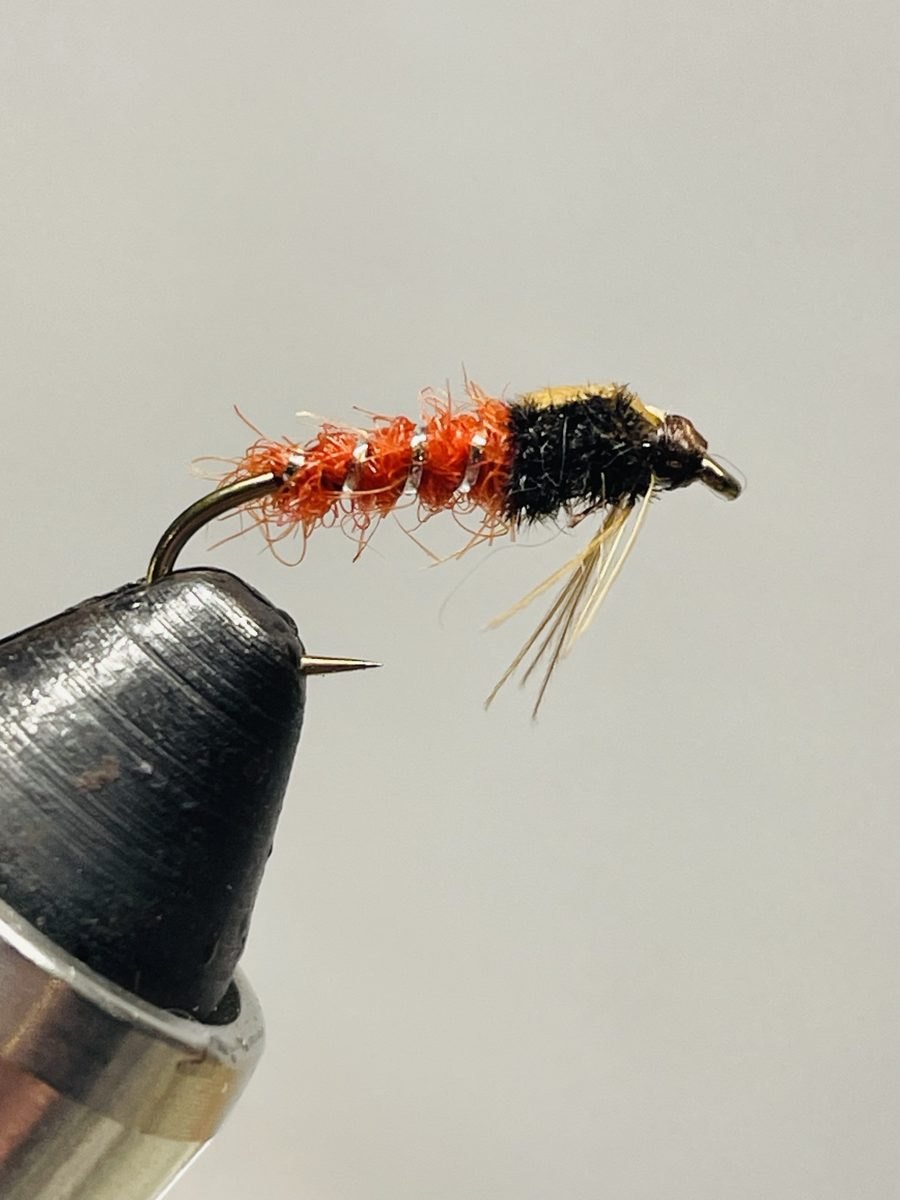
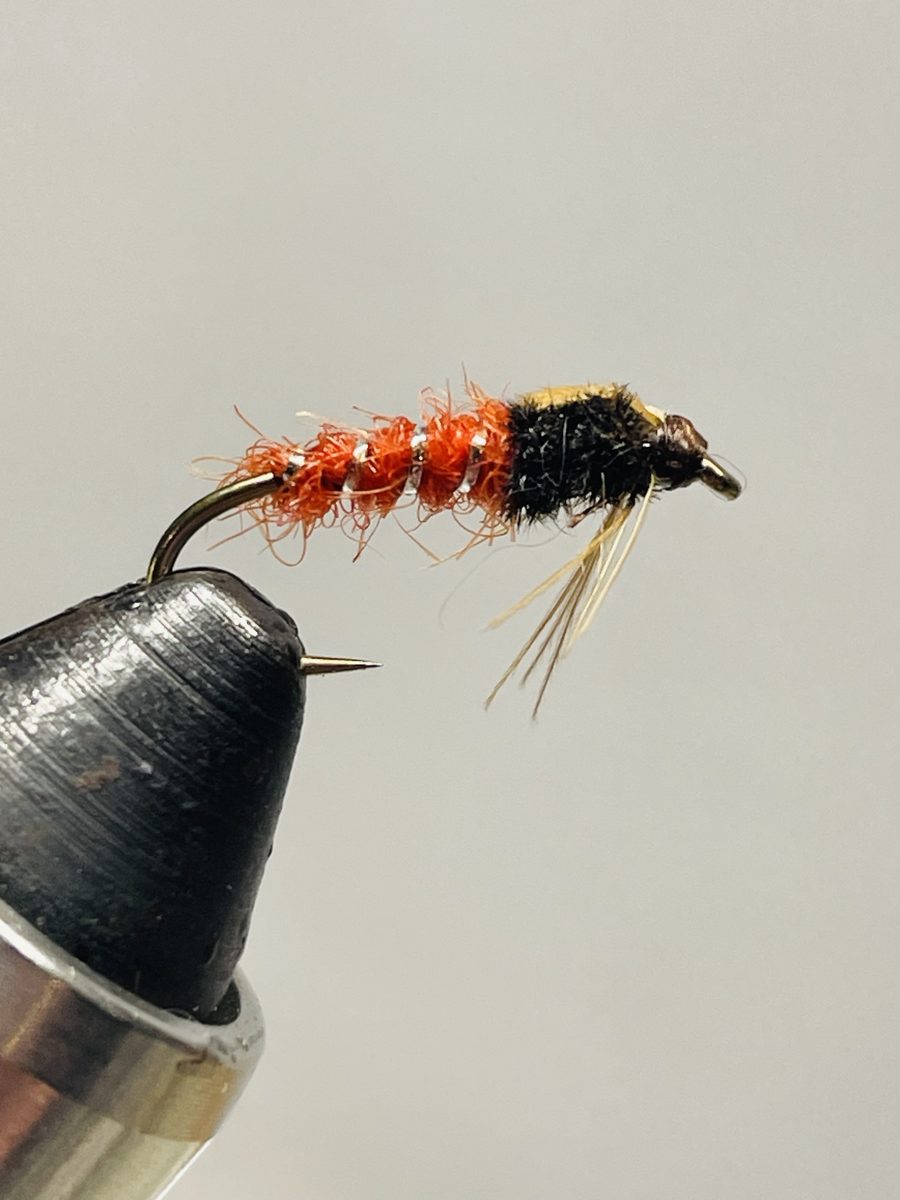
Orange: the Large Cinnamon Sedge (Potamophylax latipennis), the Caperer (Halesus radiatus) and the Cinnamon Sedge (Limnephilus lunatus). Goddard describes all three adults as orange-brown, shading toward green.
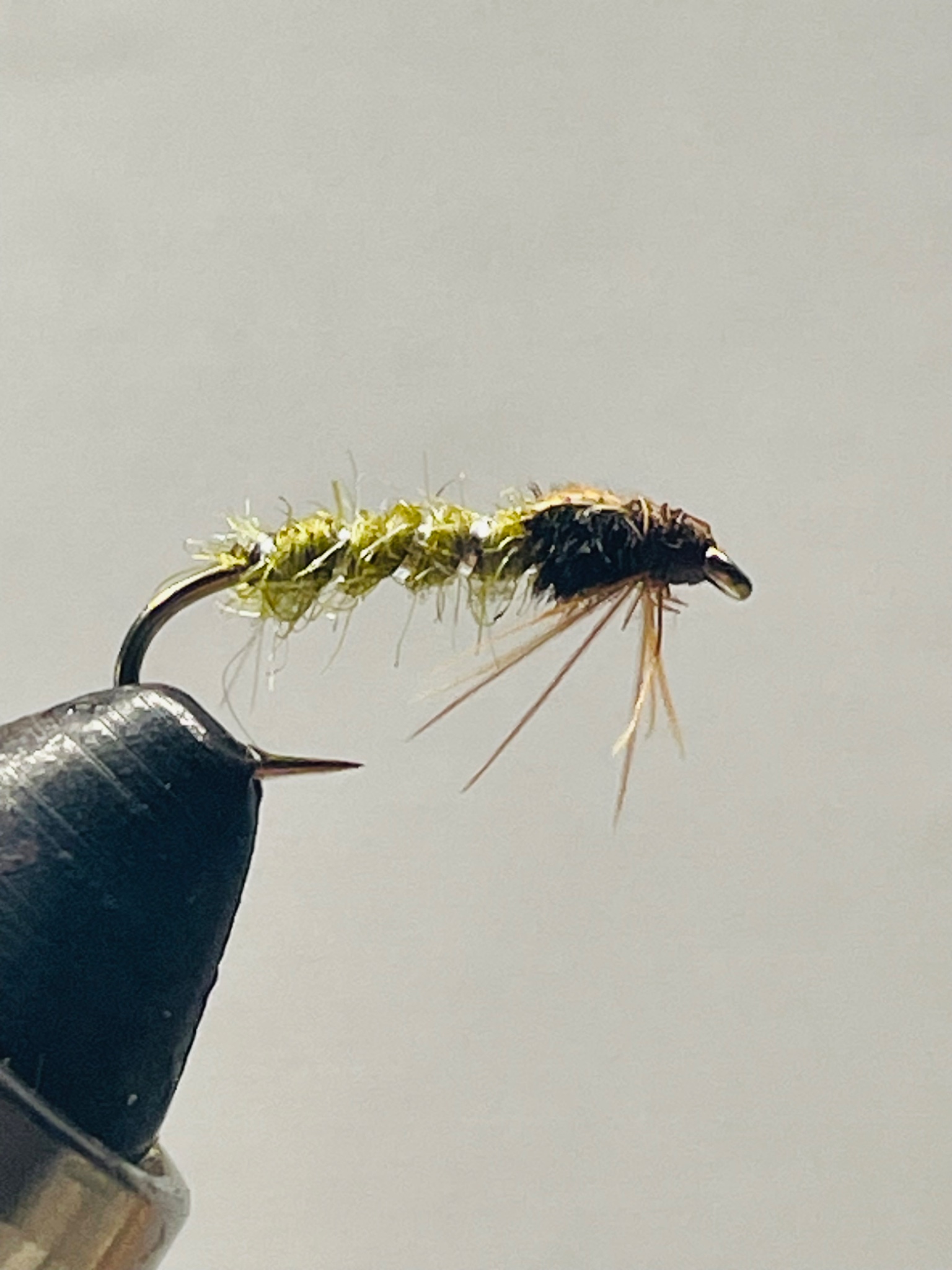
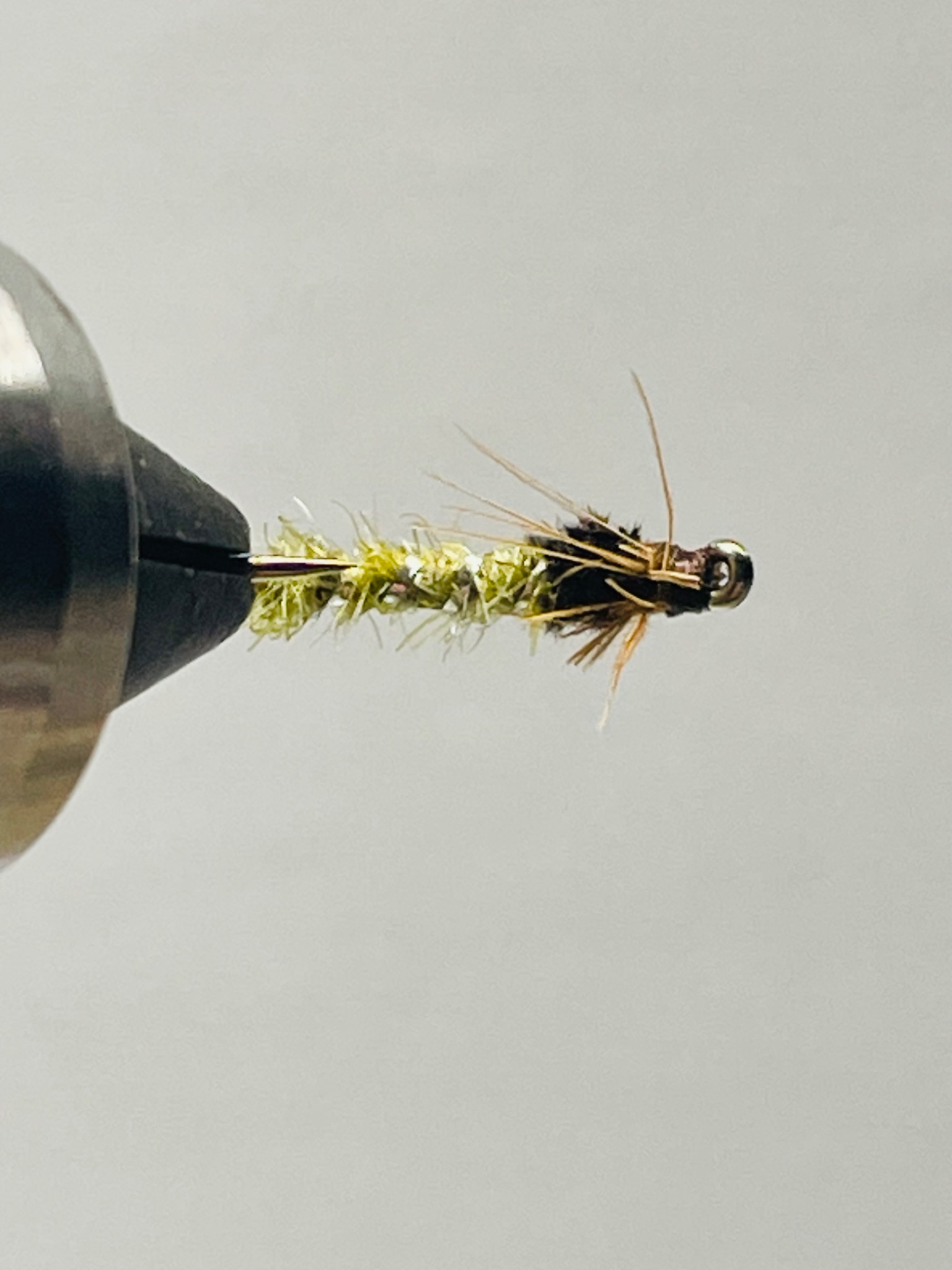
Green: the Great Red Sedge (Phryganea grandis) and the Mottled Sedge (Glyphotaelius pellucidus), with the Grannom (Brachycentrus subnubilus, "fawn to green") as a looser fit. The green version here is tied in light olive.
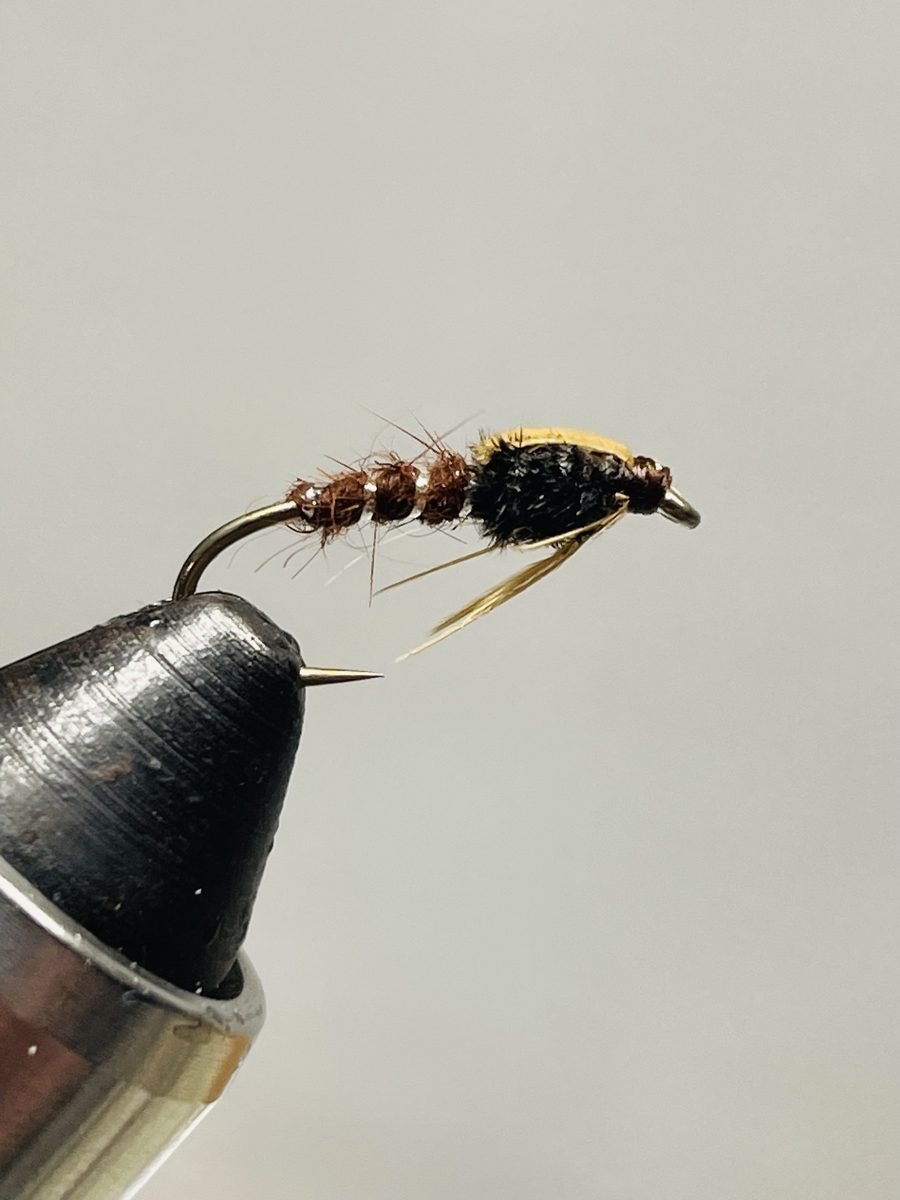
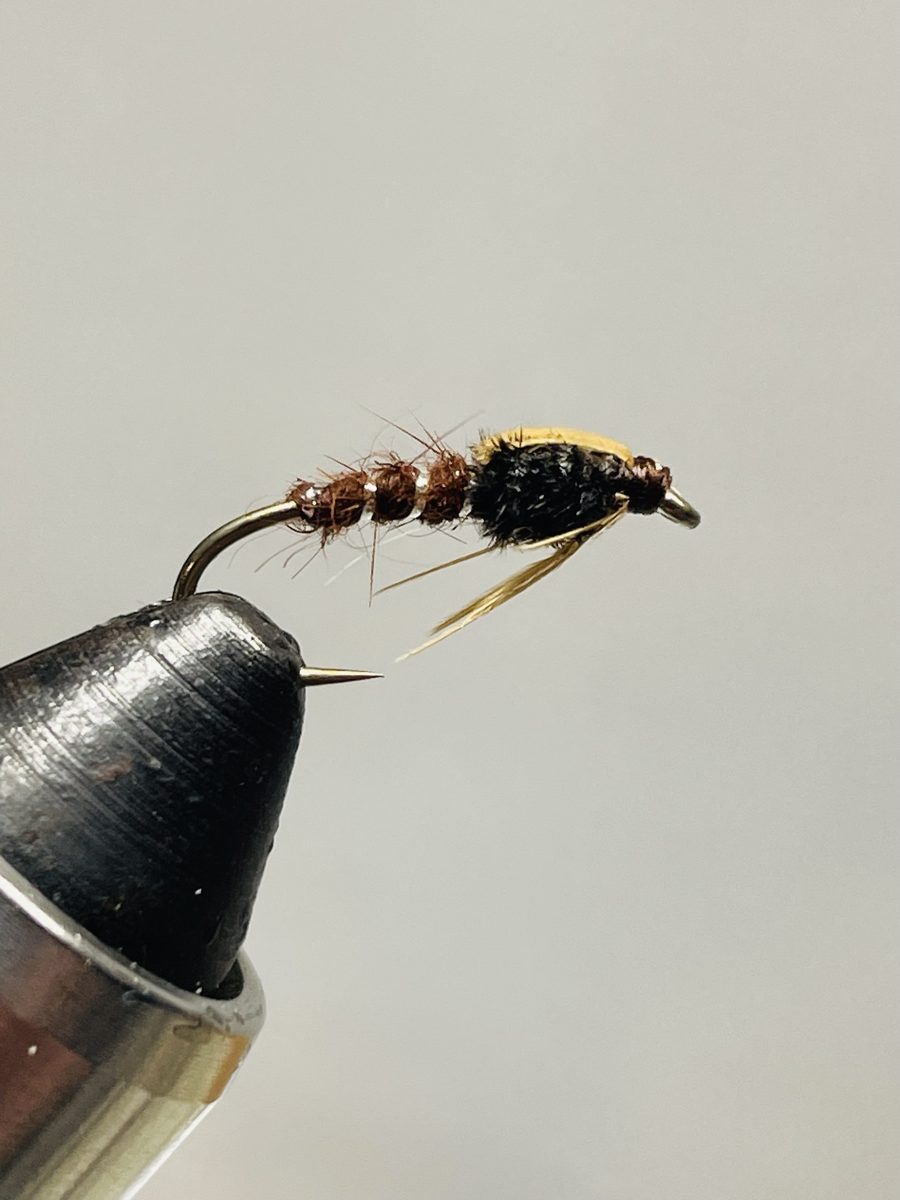
Brown: the Brown Sedge (Anabolia nervosa), the Small Red Sedge (Tinodes waeneri) and the Dark-spotted Sedge, which Goddard lists as either Philopotamus montanus or Polycentropus flavomaculatus.
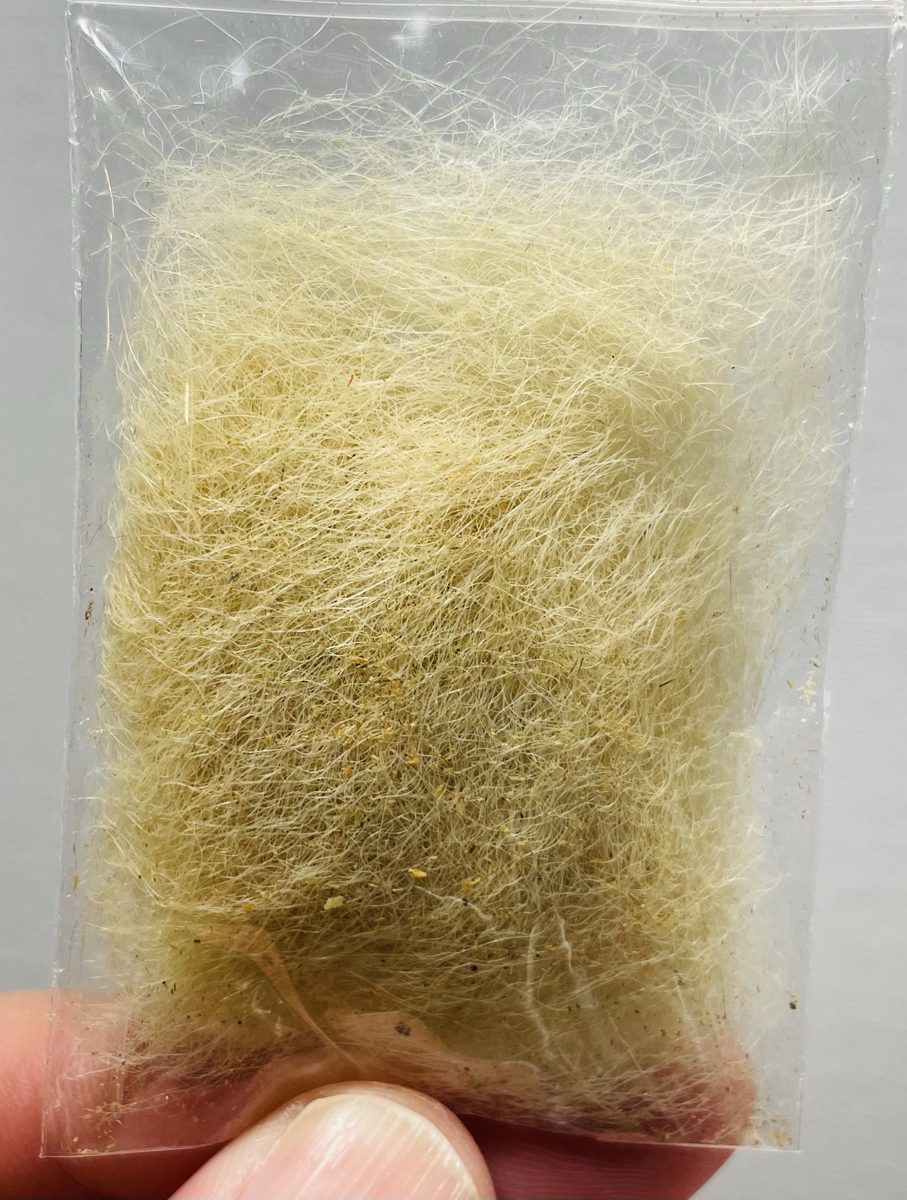
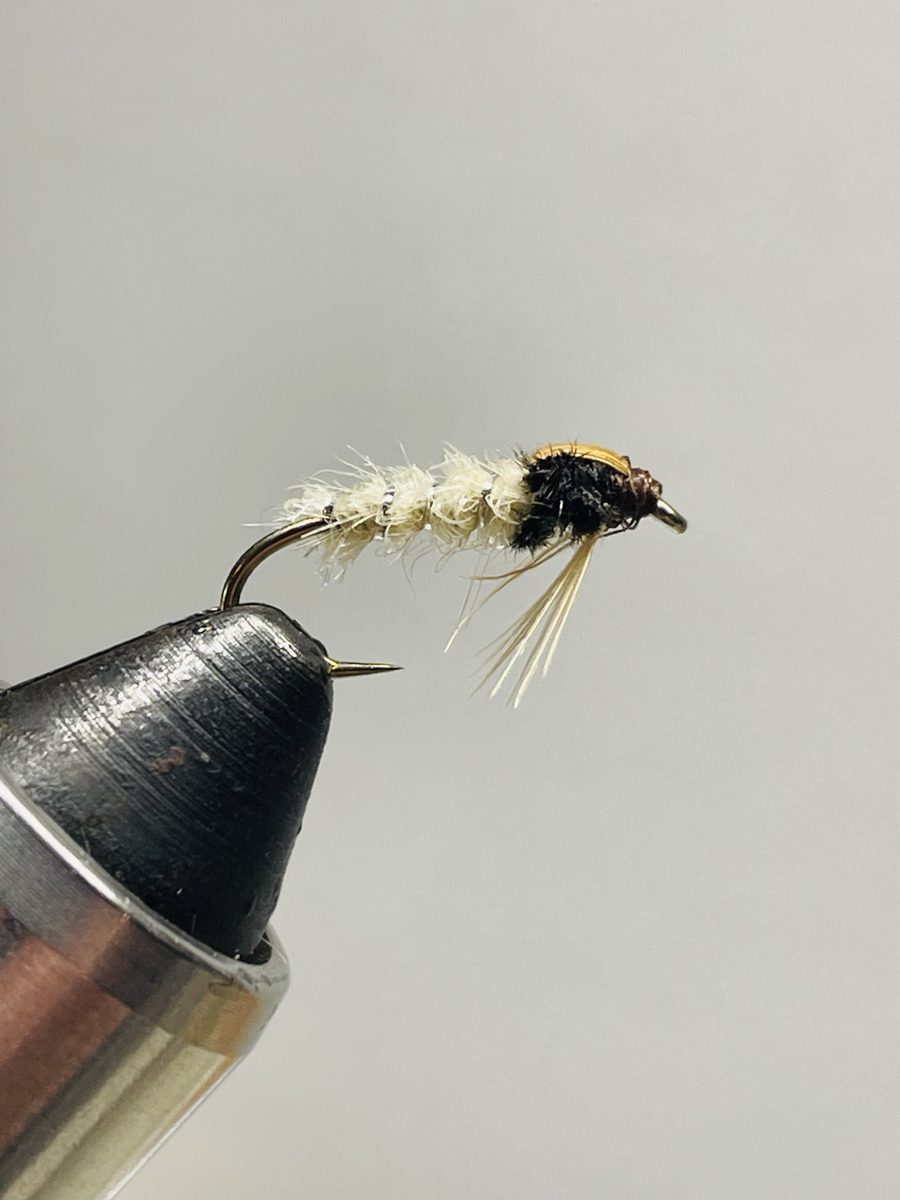
Cream: the Medium Sedge (Goera pilosa) and the Small Yellow Sedge (Psychomyia pusilla), both creamy to yellowish-grey.
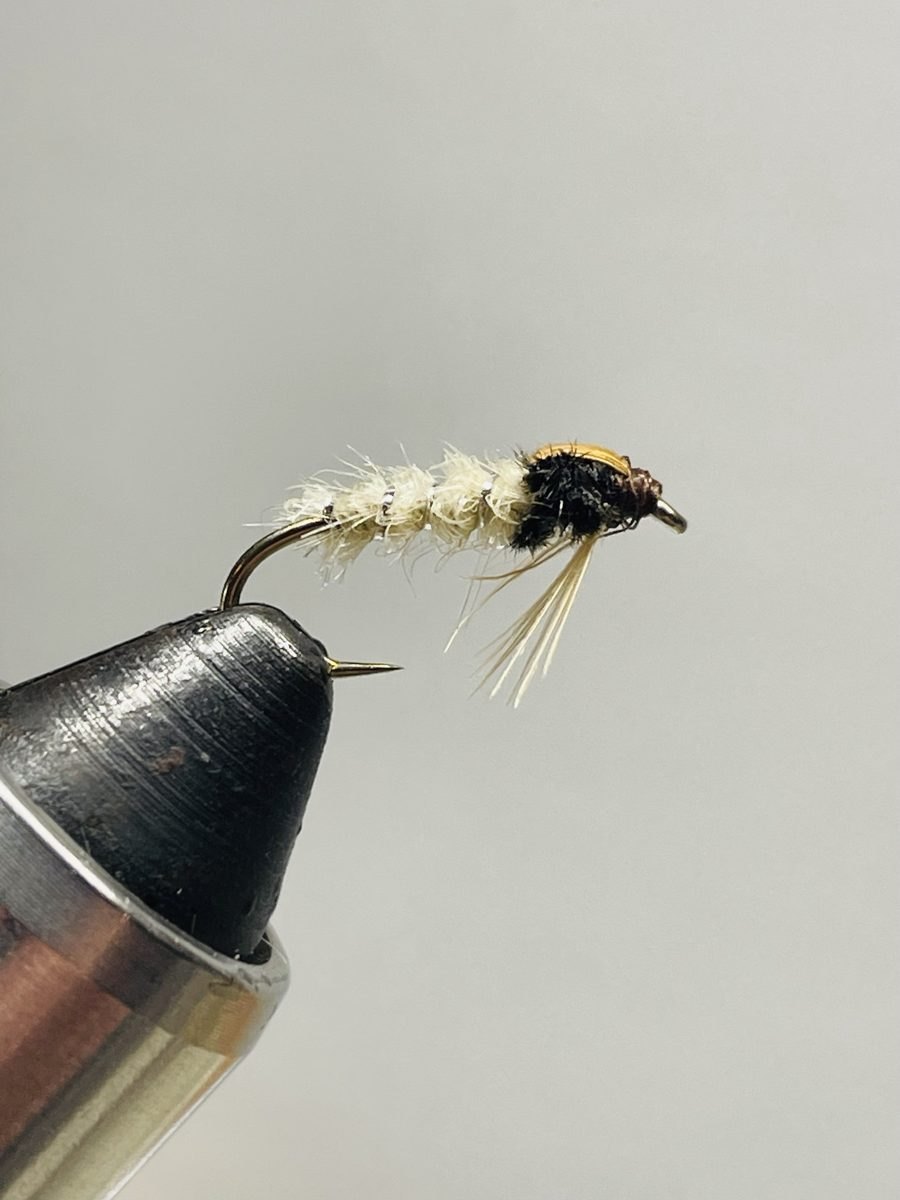
How sure is this? The rule and the adult colours are Goddard's own. The sorting is his rule applied to his own data, not a list he wrote. And a Cinnamon Sedge on an English reservoir isn't necessarily the same shade as one on your water. If yours tells a different story, I'd like to hear about it.
In fairness, I don't have every Goddard book on my shelf. He may well have spelled out which sedge each colour was for somewhere I haven't seen. If you know where, I'd love to hear it.
Why these materials
The dressing I'm working from is the one published in Mike Dawes's The Flytier's Manual. It's as close to Goddard's own as I have. Where I've changed something, like the turkey tail thorax or the dubbing loop legs, I'll say so as we go.
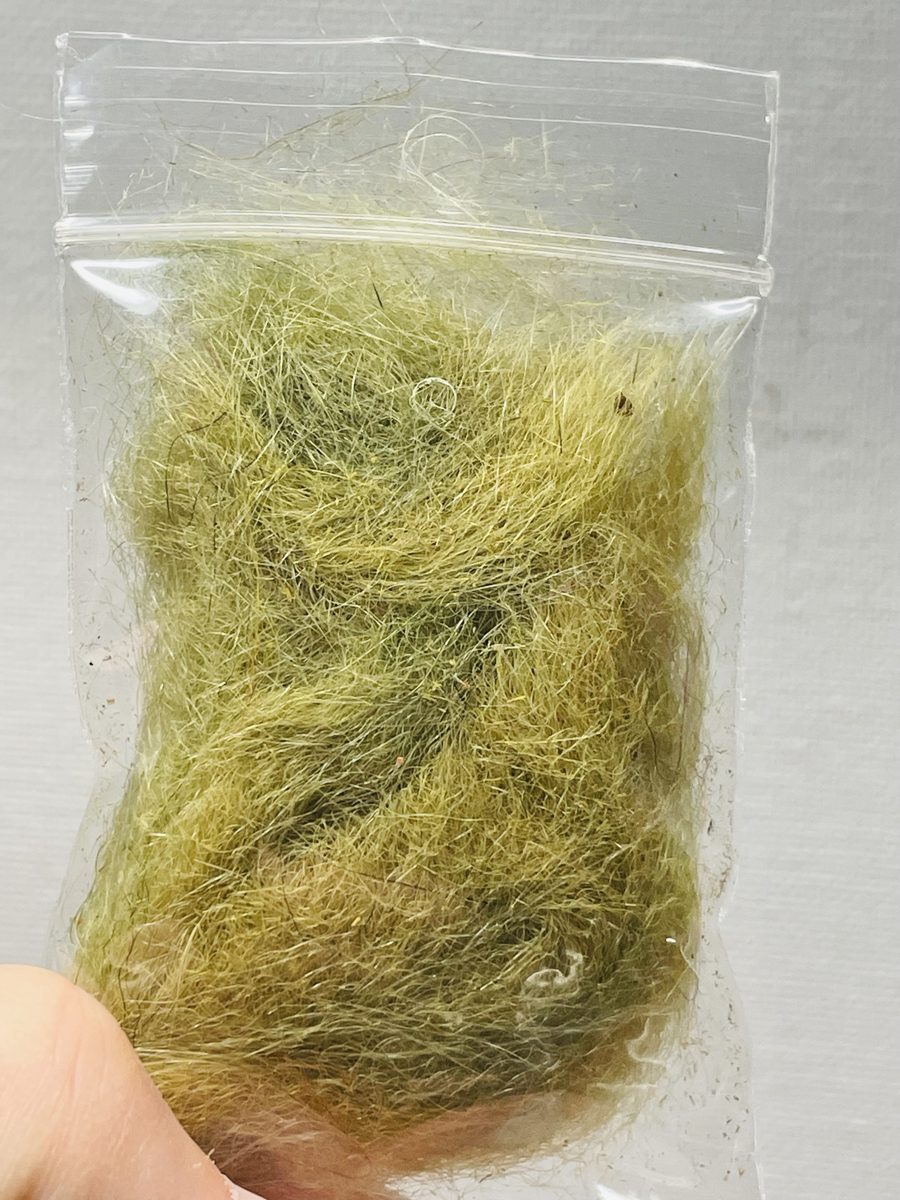
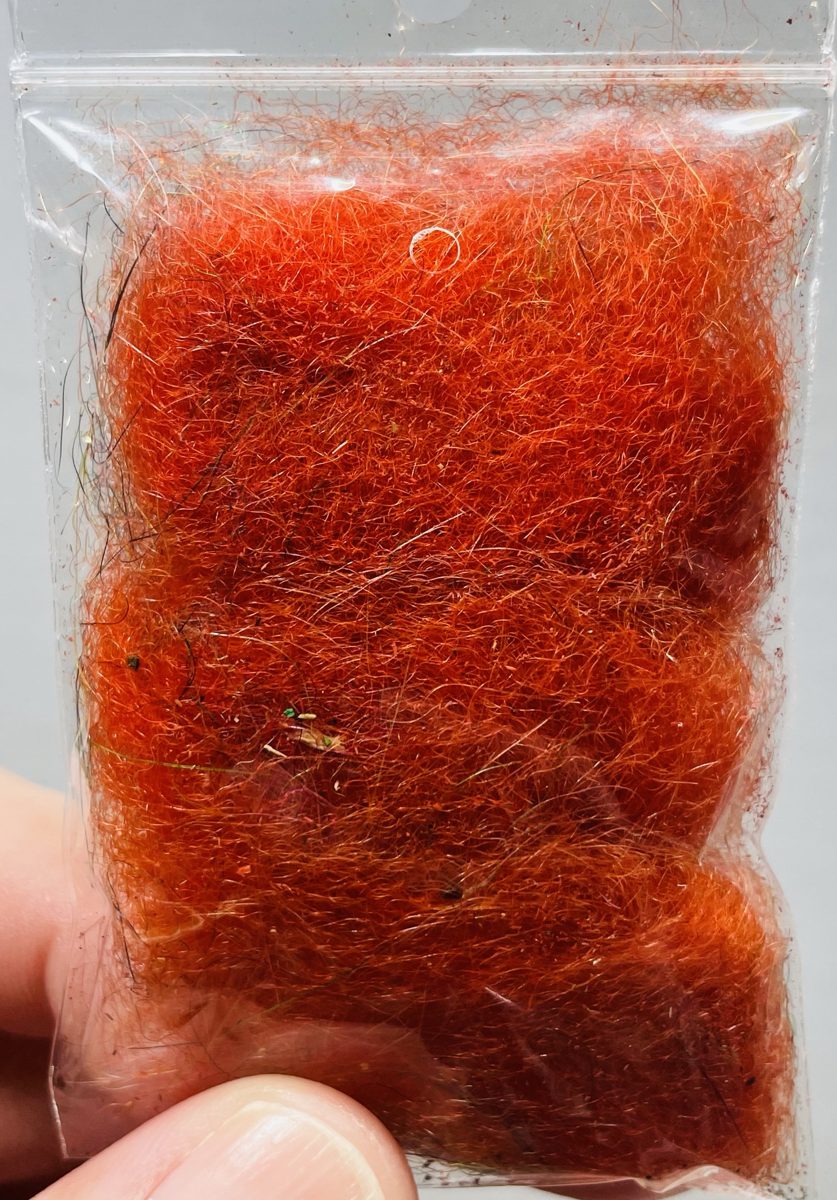
Seal fur is the heart of this fly. Its fibres are coarse and spiky, and they don't lie down flat the way soft dubbing does. That rough texture is the point. Picked out a little, the body traps tiny pockets of air, much like the gas a sedge pupa builds up under its skin as it swims toward the surface. Seal is also naturally translucent. Light passes through it rather than bouncing off, so the body glows from inside instead of looking like a solid lump of colour. Underwater, that glow and the sparkle of trapped air give the fly a sense of life that's hard to get any other way.
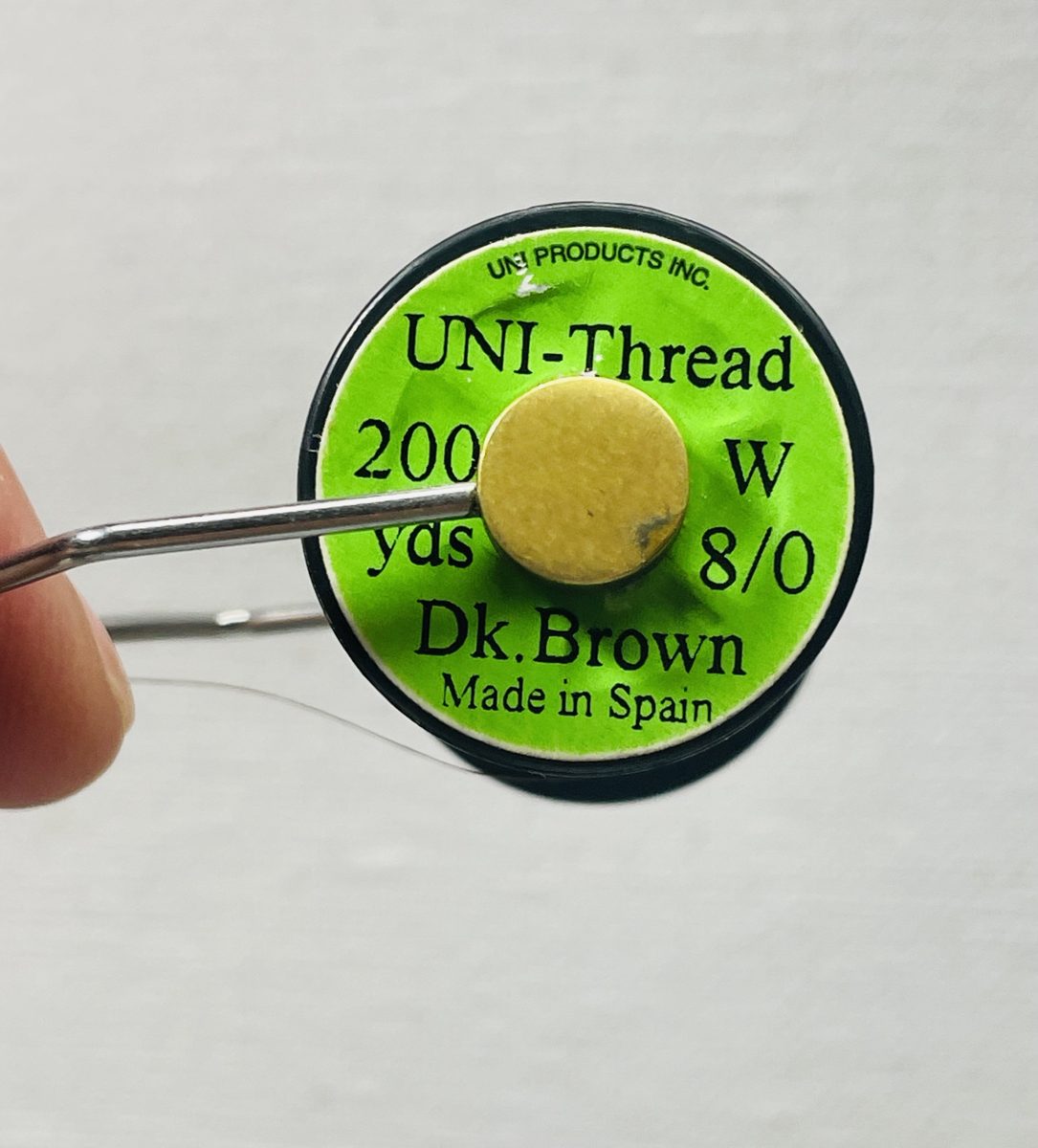
For thread, Dawes just says brown. I used UNI-Thread 8/0 in dark brown. Because seal lets light through, that brown thread can show through once the fly is wet and give the body a brownish undertone.
Soaked, that shows up in two ways. On the cream version, a little of the brown thread shows through the body and gives the fly some depth. On the olive and burnt orange, it darkens the core along the shank, so the centre of the body reads a shade deeper than the lighter fibres around it.
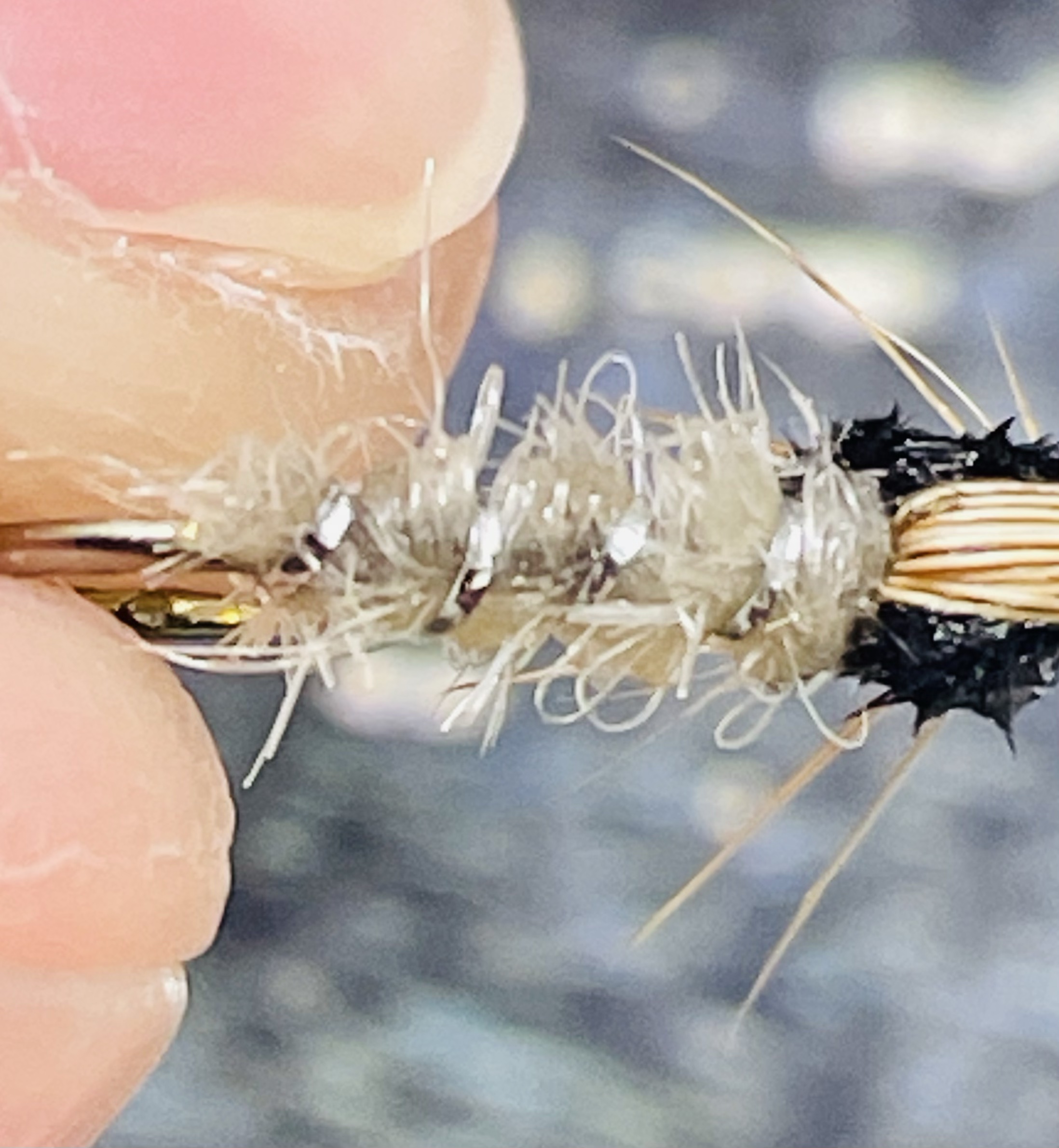
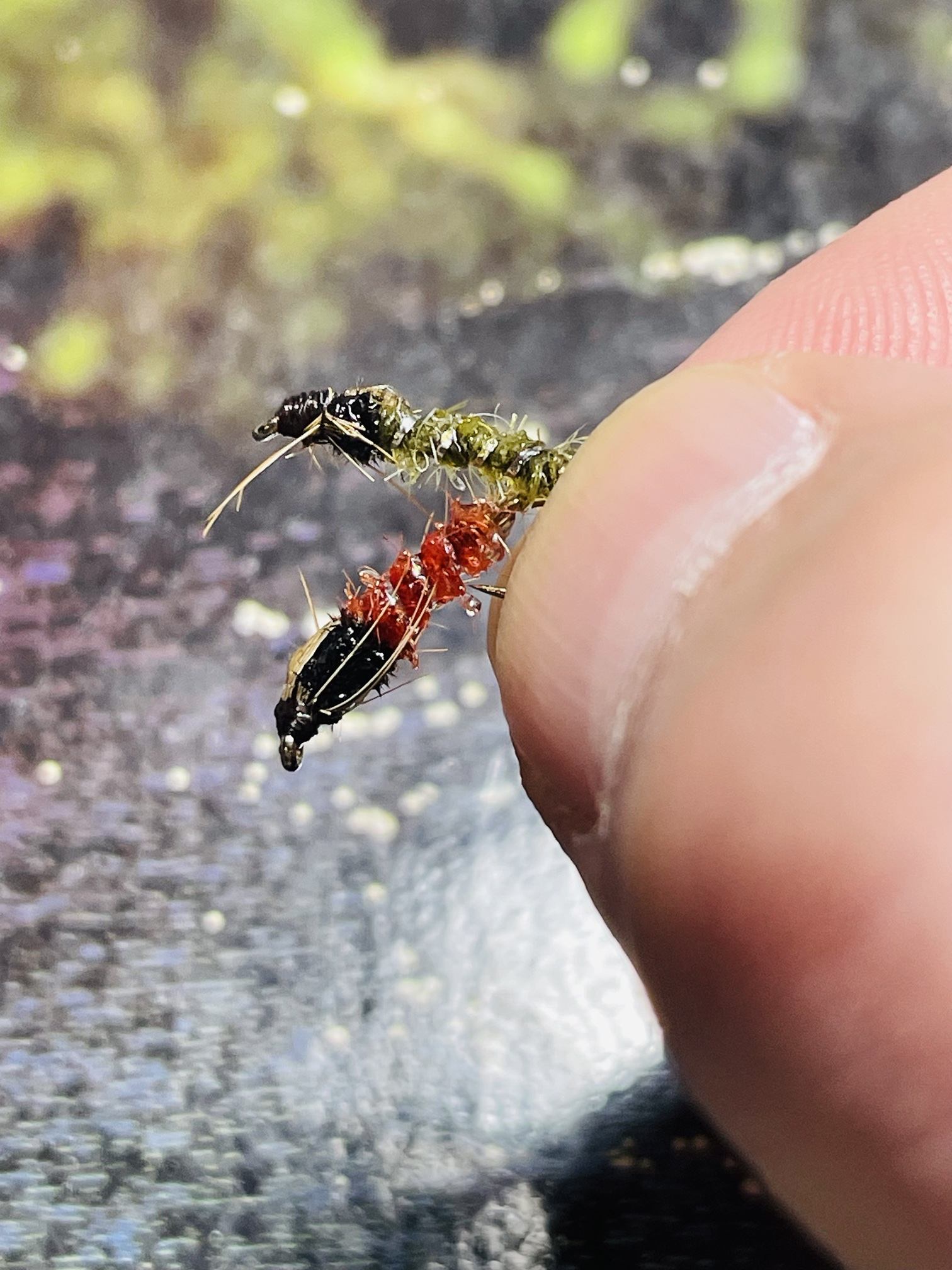
For the brown version, I didn't have brown seal fur, so I used Hareline Dubbin in Seal Brown, #33. Despite the name, that's rabbit dubbing and you can see the density of the rabbit compared to the seal. Put the brown fly next to the other three and you can see the difference for yourself: the rabbit is denser and more opaque, while the seal lets a little bit of light through.
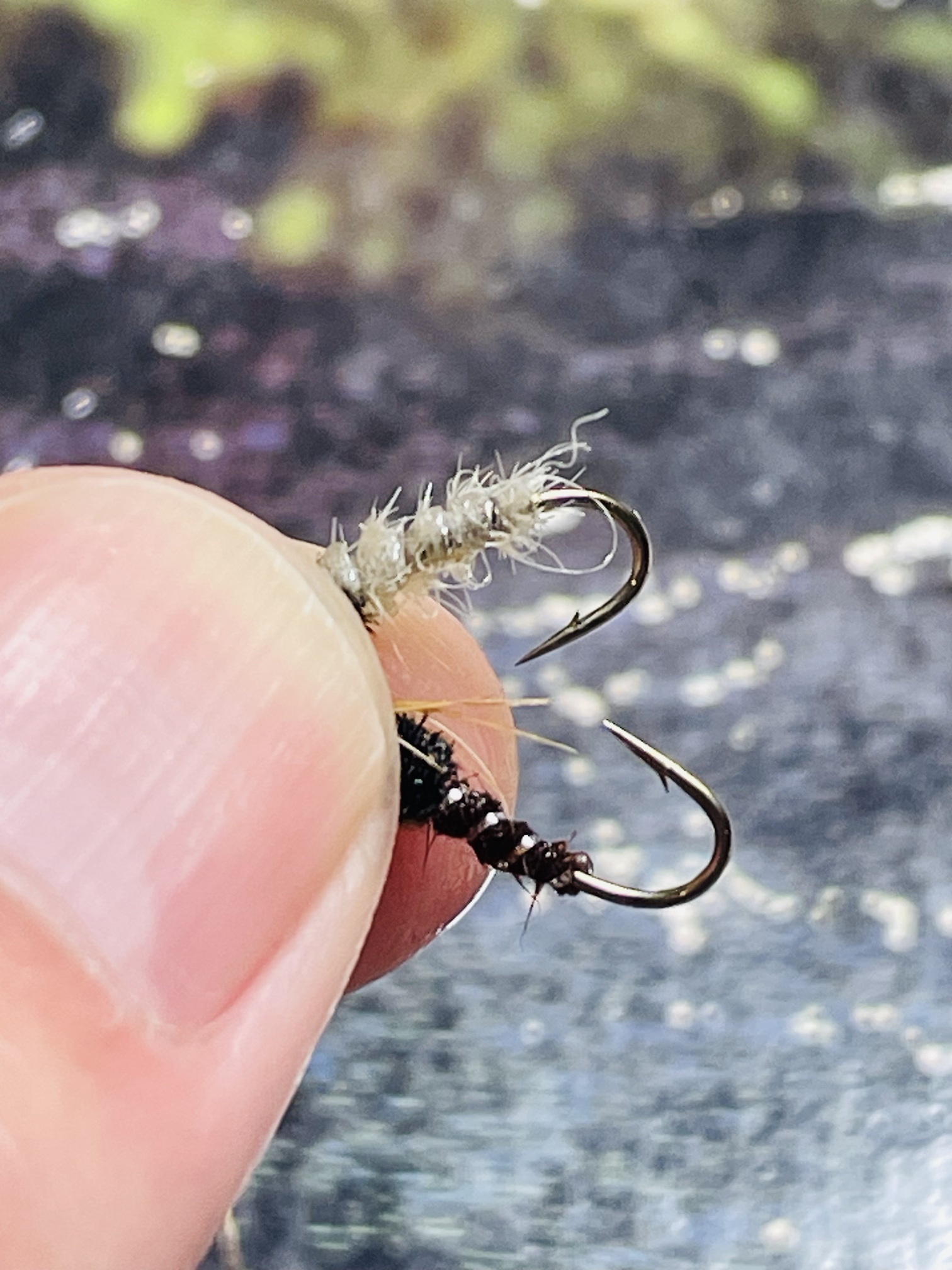
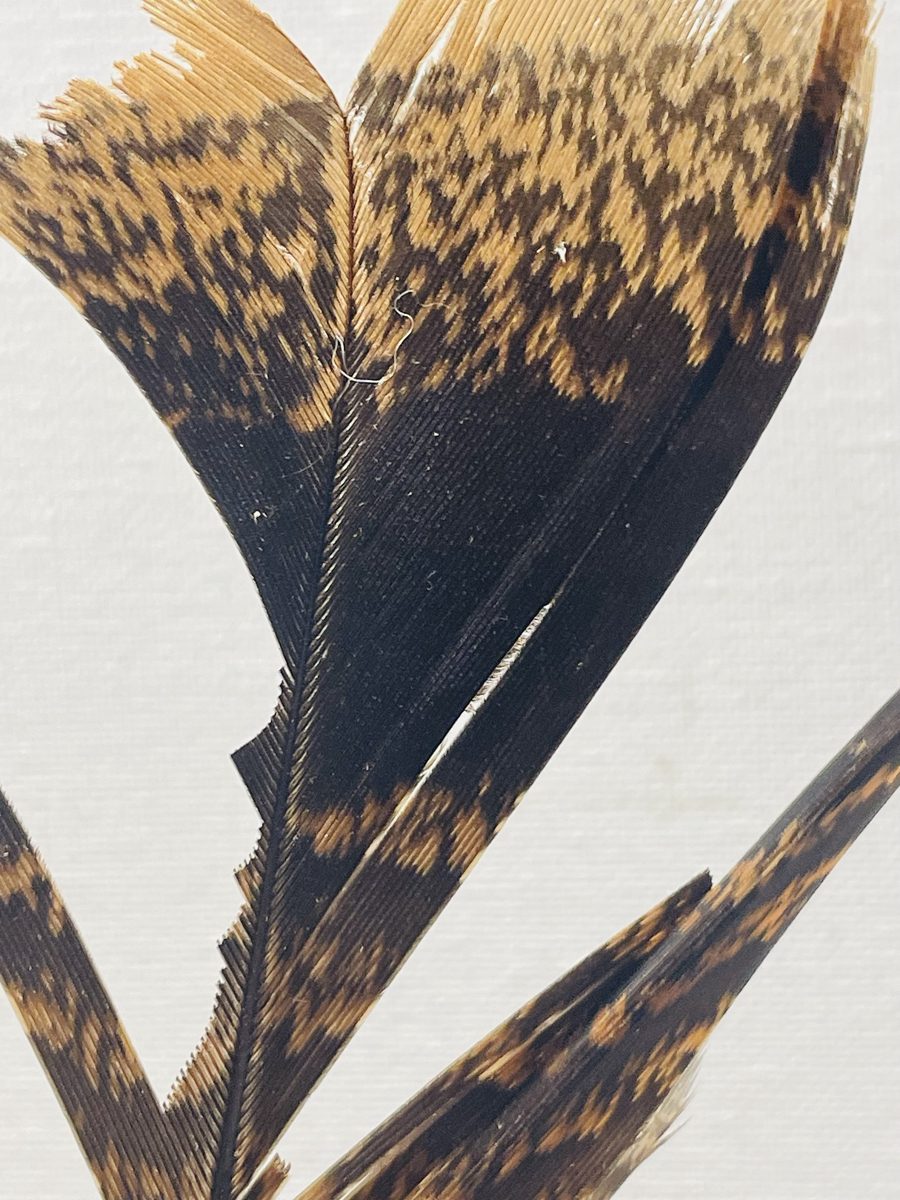
The Dawes dressing calls for condor herl for the thorax. Real condor is protected and next to impossible to get today, so I swapped in mottled turkey tail, using the fibres from the dark band near the tip. It's a trick that has been all but buried over time: the fibres from a number of birds' feathers, twisted into a rope, take on the same or similar texture as twisted peacock herl.
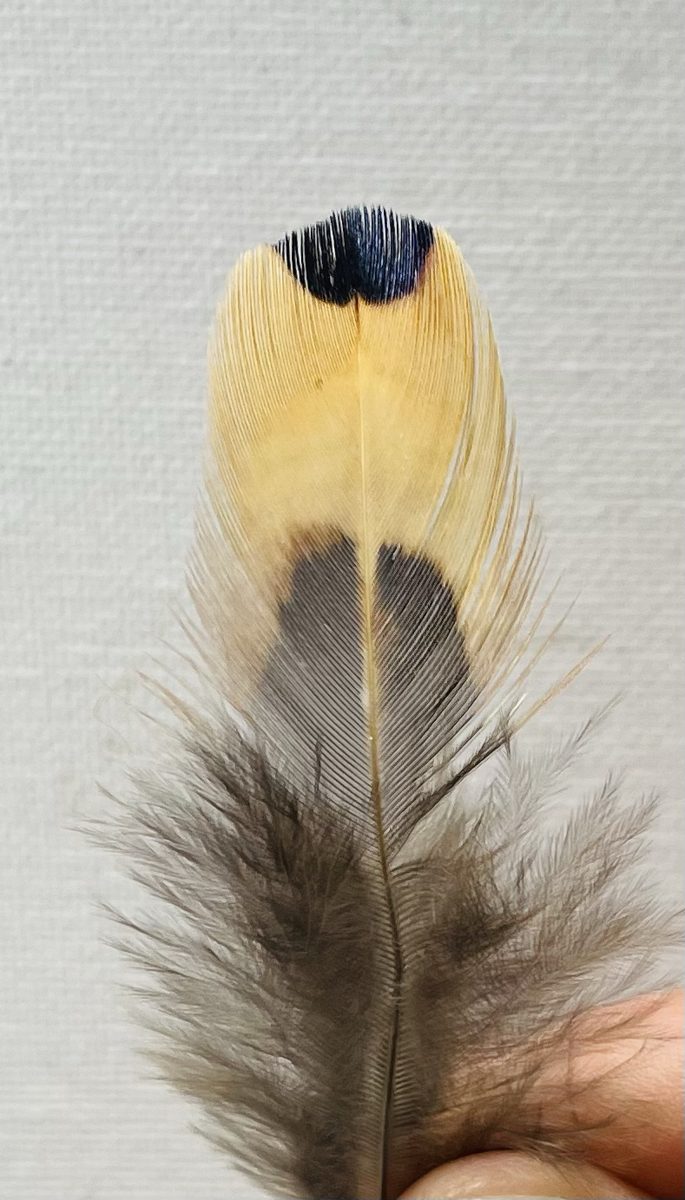
For the wing case and legs, the Dawes dressing doesn't name a feather. It just calls for pale fibres from a bird. So I went by the drawing in the book and looked for something that matched it, and that led me to ringneck pheasant cock flank. It's golden-buff with a dark spot at the tip, the fibres are soft enough to move in the water, and one feather covers both jobs: the wing case over the top and the legs underneath.
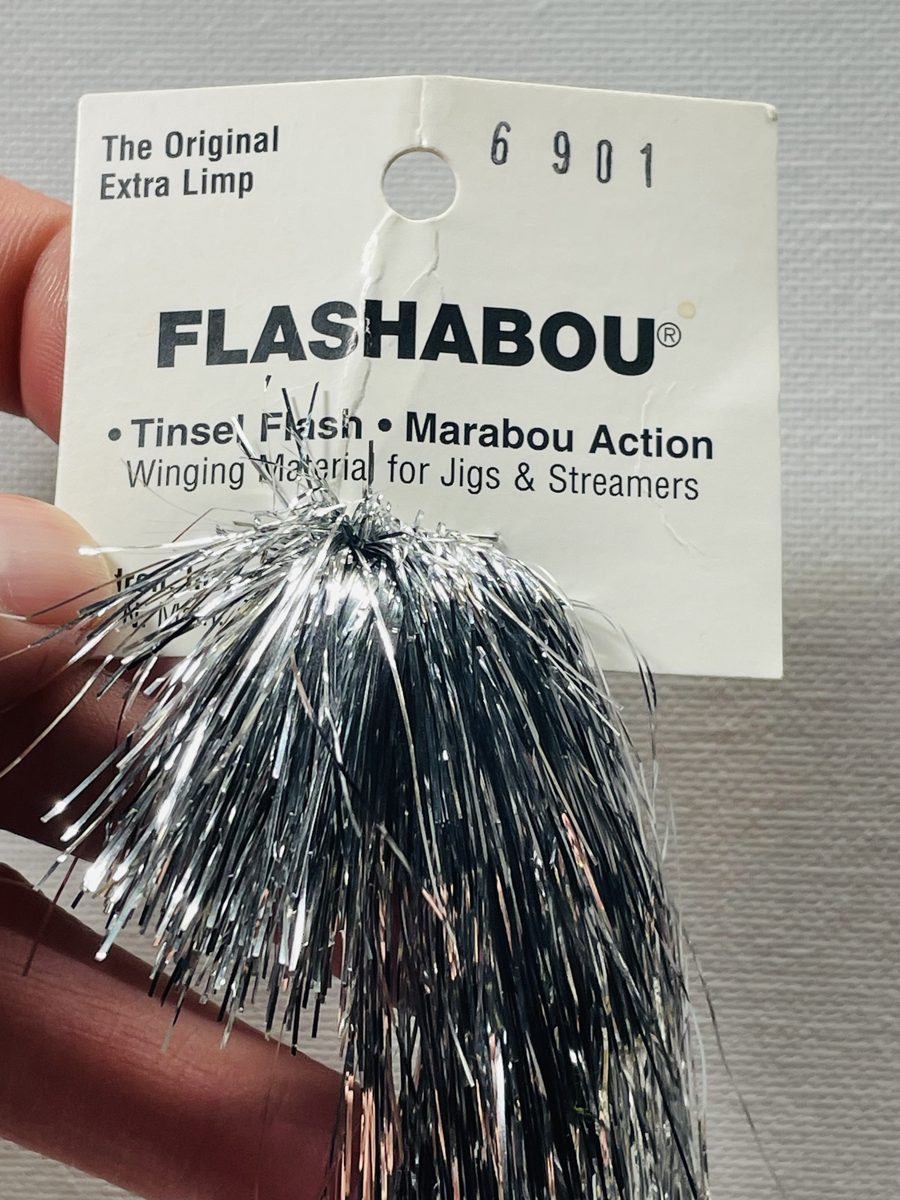
For the rib, Dawes calls for narrow silver tinsel. In the book's drawing it looks like flat mylar, but whether Goddard himself used flat or oval tinsel, I can't say for sure. I used silver Flashabou, #6901. Either way, the rib does two jobs: it marks out the body segments, and it adds a little flash, leaving the potential impression of gas trapped under a rising pupa's skin.
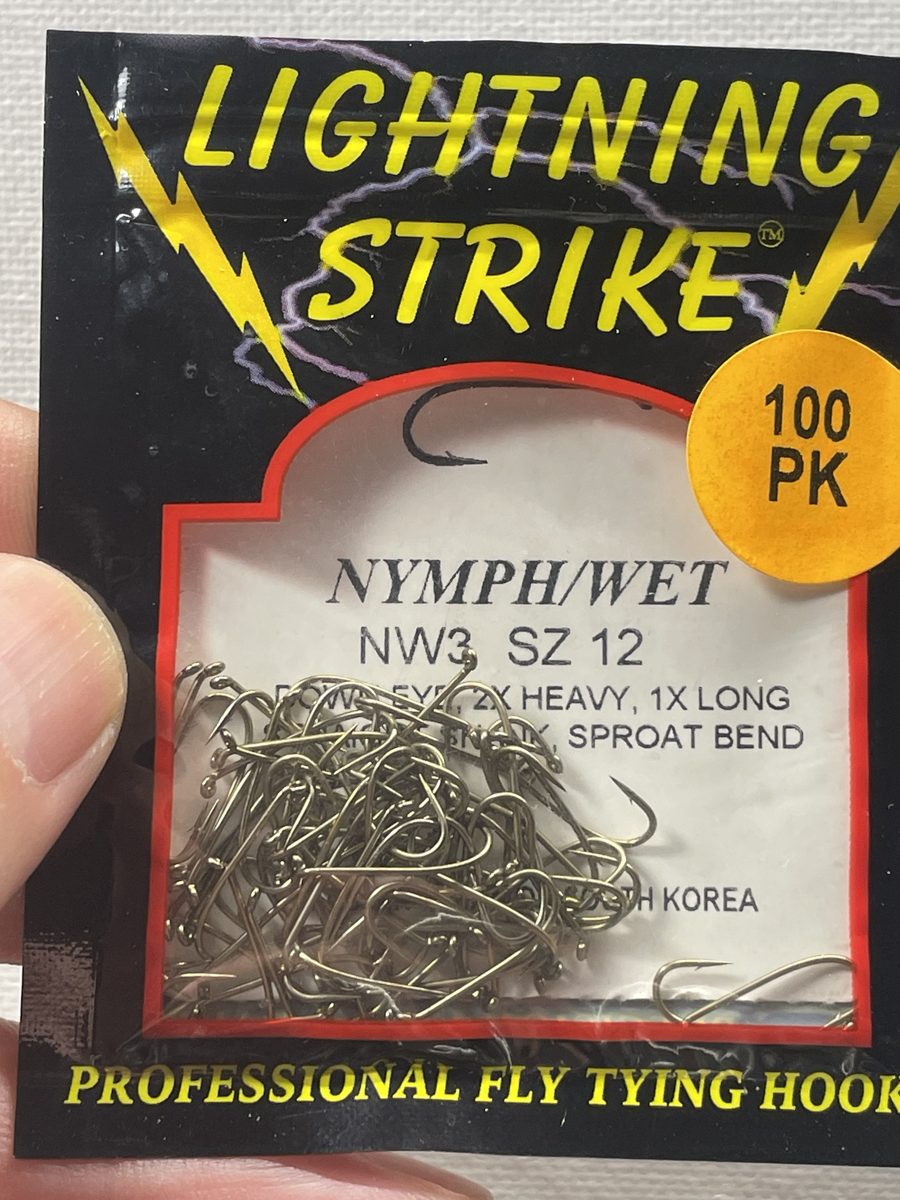
Dawes calls for a long-shank hook in size 12 or 14. I tied mine on a size 12, 1X long, the Lightning Strike NW3.
Materials
Hook: Lightning Strike NW3 Nymph/Wet, size 12
Thread: UNI-Thread 8/0, dark brown
Rib: Flashabou, silver #6901
Body: Seal fur dubbing (Canadian Tube Fly Co.), light olive with a brown cast
Wing case: Ringneck pheasant cock flank feather, golden-buff with a black tip spot
Thorax: Mottled turkey tail, 5–6 fibres from the dark band near the tip, twisted into a rope
Legs: Ringneck pheasant cock flank feather, oversized, in a dubbing loop
Head: Tying thread
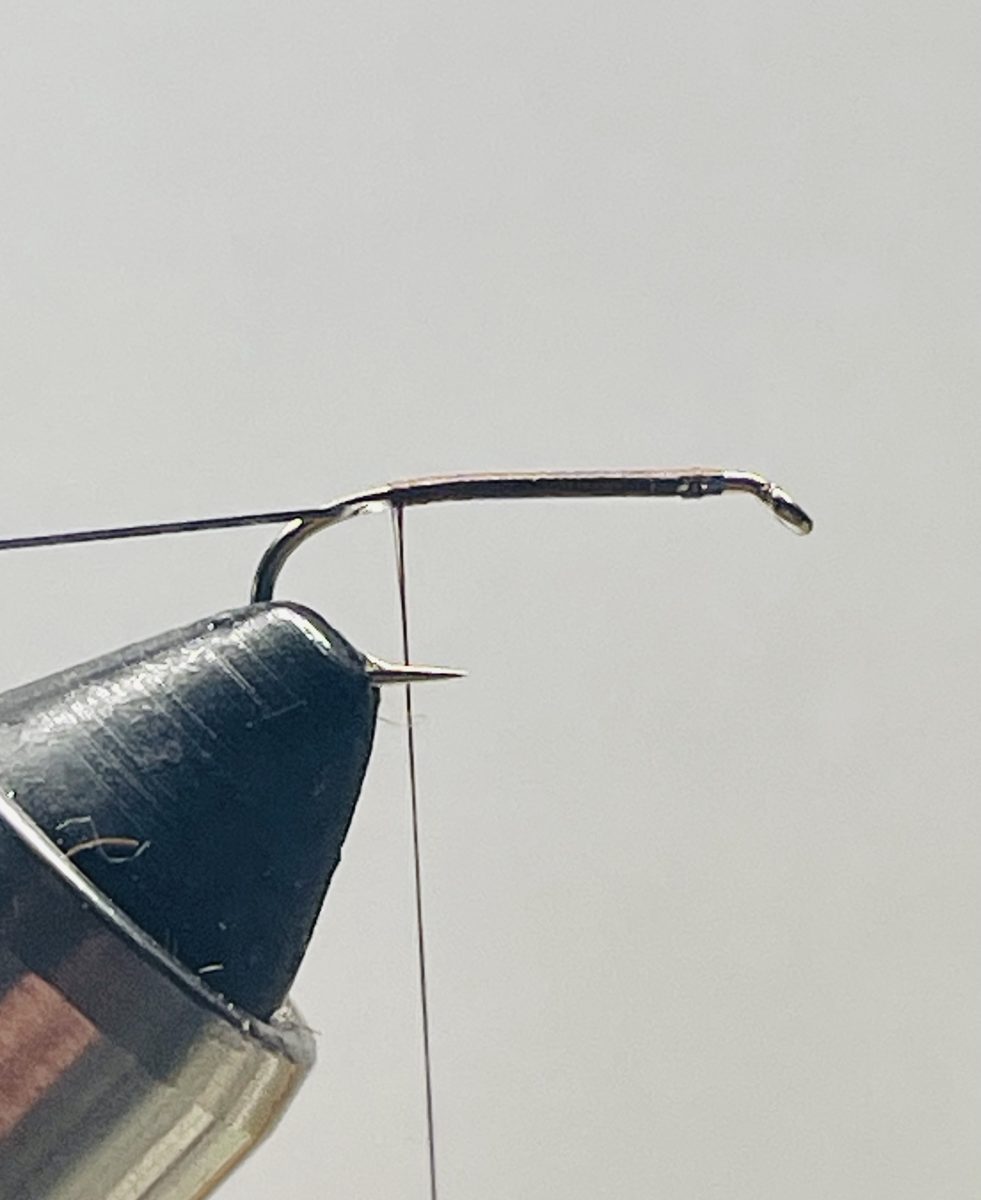
Step 1: Thread base and rib
Start the thread just behind the eye and tie in the silver rib. Wrap back down the shank, binding the rib along the top, and stop just where the bend starts. The underbody doesn't need to be perfect, since the dubbing will cover it.
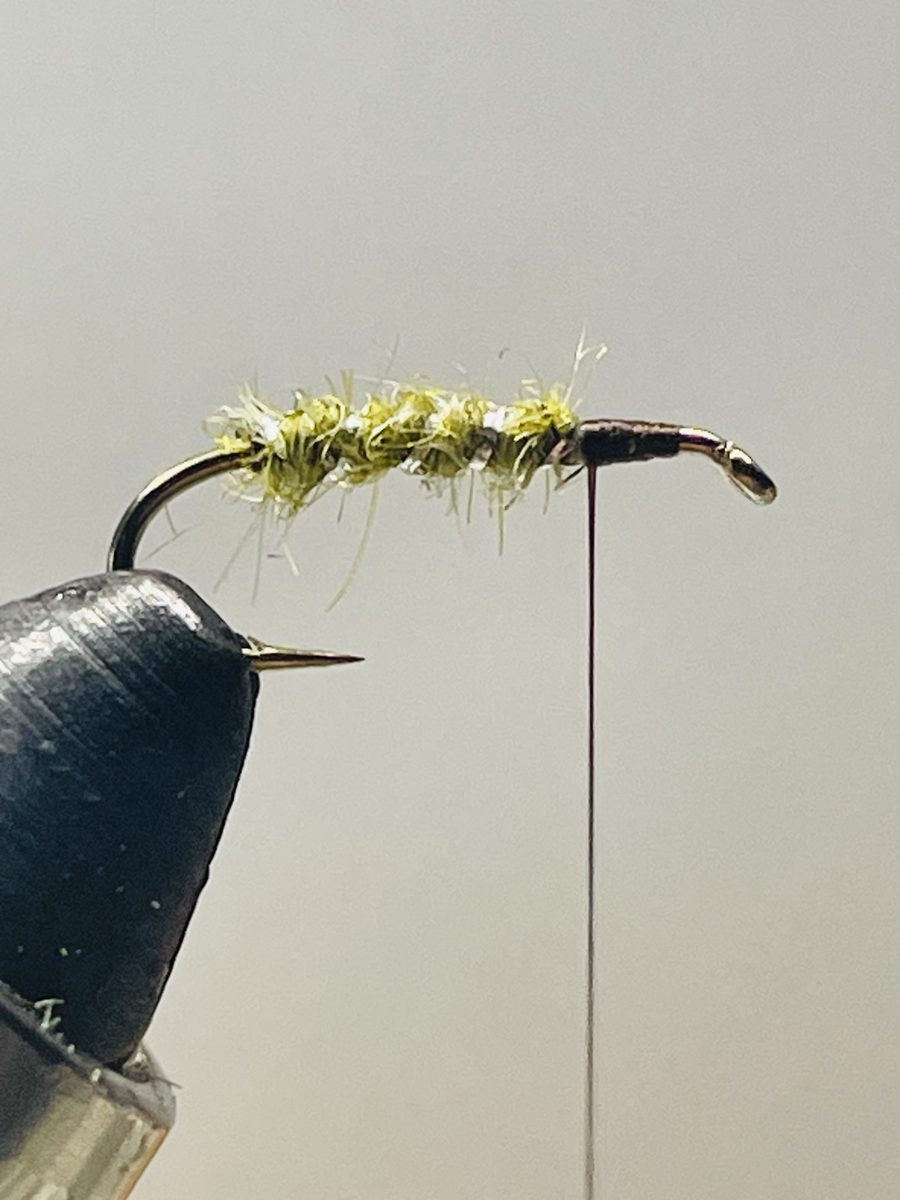
Step 2: Dubbed body and rib
There isn't much room at the back of the hook to work with, so if you need a little extra space, advance the thread to roughly above the hook point. That gives your fingers room to dub. Or with a rotating vise till ppl it up onto the side so the hook is not impeding the thread. Then wrap the dubbing back to the bend before dubbing forward over the back two-thirds of the shank to form the abdomen. Don't try to stop the dubbing exactly where the thorax begins. Instead, carry it about halfway into the thorax area. Finally, wind the rib forward in evenly spaced turns, tie it off and trim it.
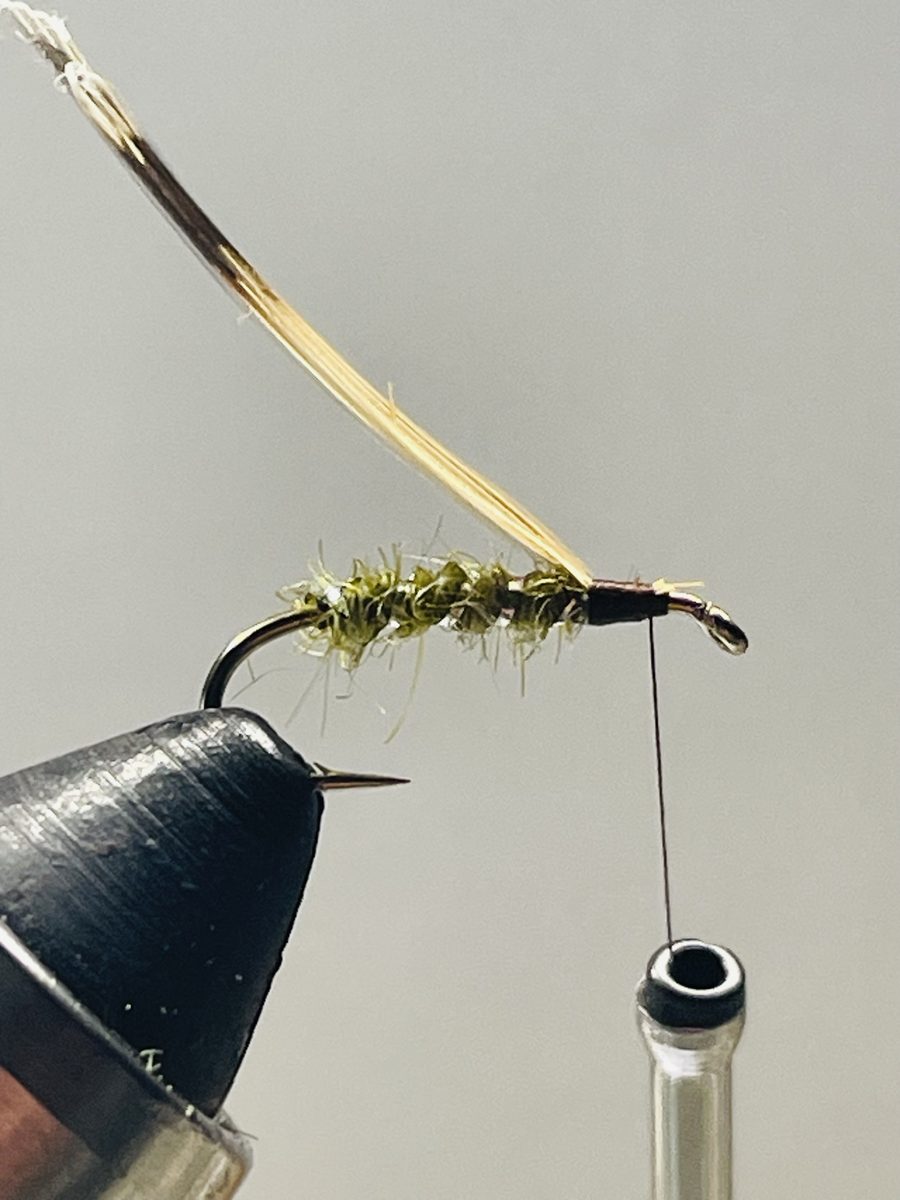
Step 3: Wing case tie-in
Select 8 to 12 fibres from the ringneck flank and tie them in by the tip side at the front of the abdomen, with the tips pointing towards the hook eye. They'll be pulled forward over the thorax later to form the wing case.
Option: Don’t trim the tips that reach past the eye. Fold them down underneath and they become the legs, and you can skip the hackle in step 6 altogether.
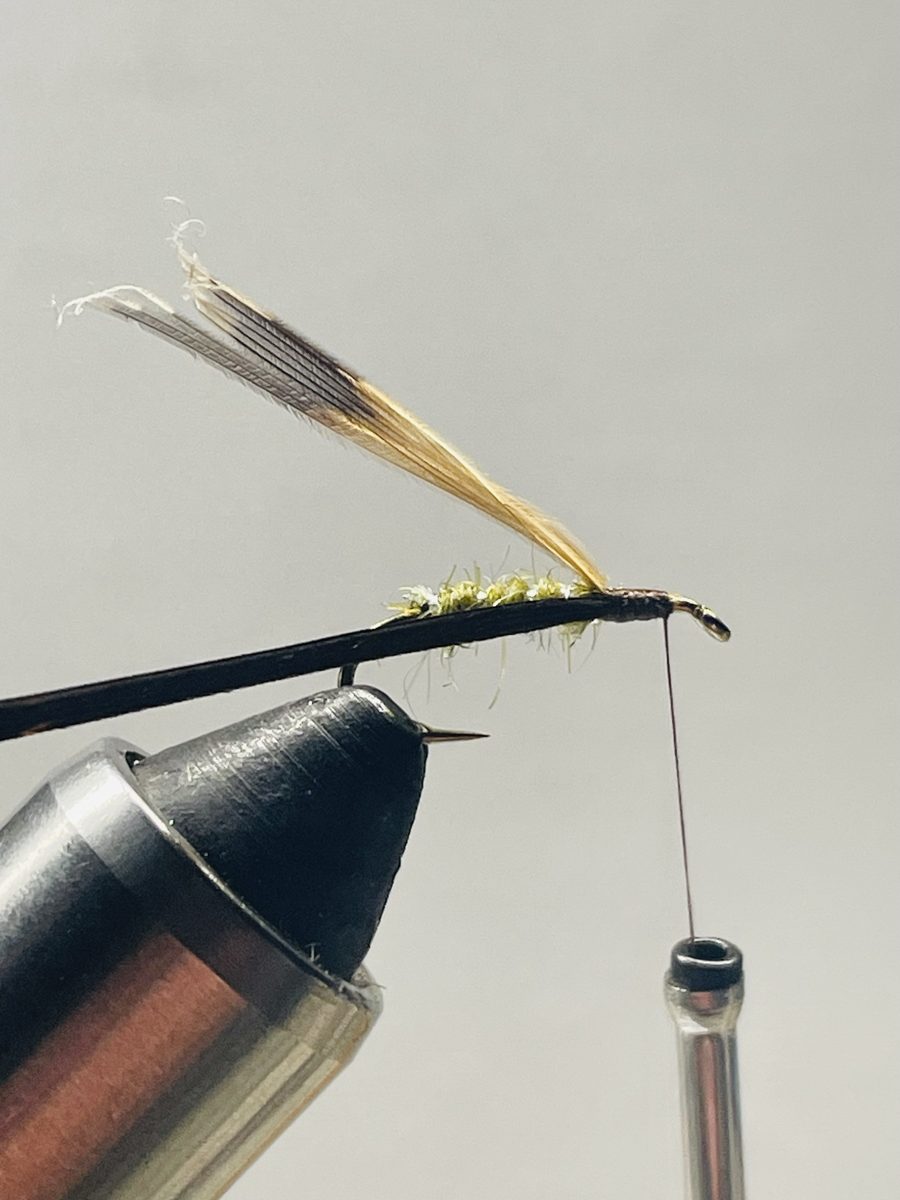
Step 4: Thorax tie-in
Take 5 or 6 fibres from the dark band near the tip of the turkey tail. Make sure they're a good few inches long, because twisting them into a rope shortens them. Tie them in by the tip side, off to the side of the shank, binding them back to where the dubbing starts with a wrap or two. Check that there's no gap between the abdomen and thorax.
Step 5: Twist and wrap the thorax
Grab the mottled turkey fibres with a pair of hackle pliers and twist them into a rope, the same way you'd twist peacock herl. As it tightens, the fibres flare out and it starts to look like herl, just in a different color. Wrap that rope forward to build a fuzzy, buggy thorax.
this trick lets turkey tail stand in for the herl the old books call for. It's rarely talked about, and the technique is worth having in your back pocket.
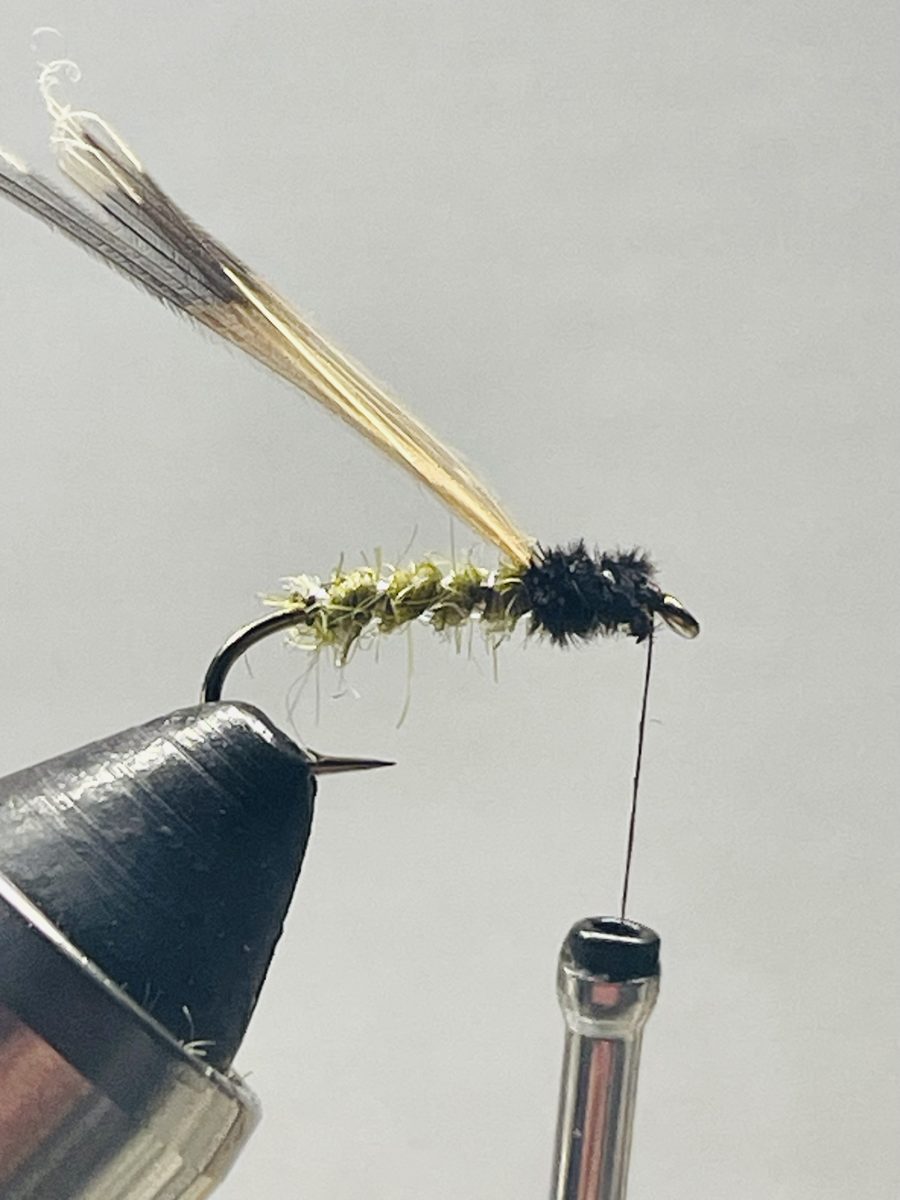
Step 6: Legs with a dubbing loop
The recipe from Dawes shows a small brown hackle is to be used in front of the thorax just before the building of the head and whip finish. The way I’m approaching this step is a little bit different. For imitation of legs I’m using an oversized hackle spun in a dubbing loop. That's why you see two strands hanging in the photo: one is the tying thread, and the other is the dubbing loop itself. Place stripped hackle tips in the dubbing loop. I like to check that the hackle tips are roughly 1/4 inch from the shank and before spinning them I do a half wrap around to see if the fibers will land below the thorax. Once you have the hackle tips where you want them cut the butt side off close to the dubbing loop so that mostly just the tip side remains. Spin the loop, wrap it in, and you get nice, sparse legs tucked right up under the fly. With the wing case and a little flash showing through, this is a very solid representation of the sedge pupa.
John Goddard wrapped a hackle here. I chose the dubbing loop instead. It's much easier to find a longer hackle in the colour you need than to wrestle a small one into place by wrapping it, and that's one of the big advantages of the dubbing loop.
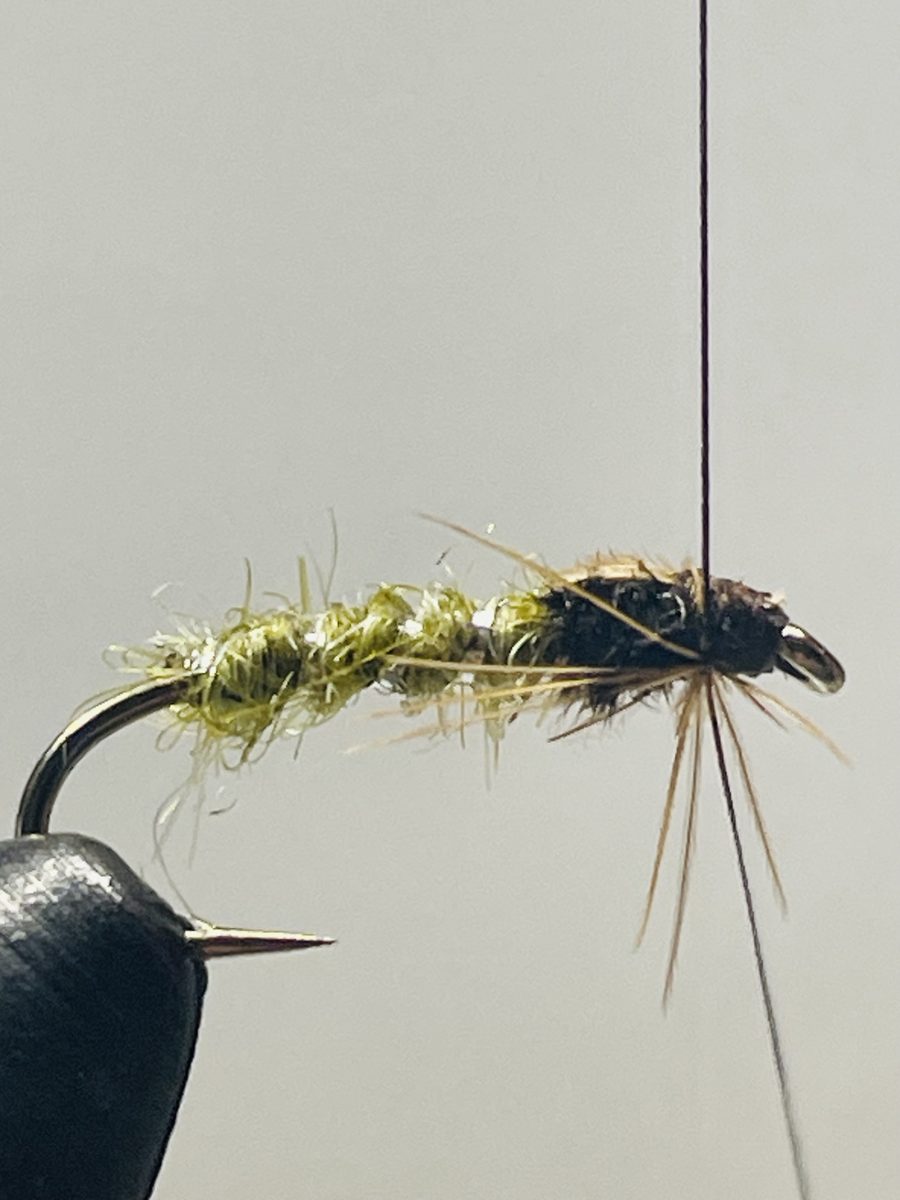
The video below shows the full soft hackle version of this technique, where the hackle goes all the way around the hook. For this fly, use about 75% less hackle in the loop and don't make a full turn. Place it so the fibres sit only under the thorax, and you get legs instead of a collar. Because the loop lets you put the fibres exactly where you want them, both options are open to you.
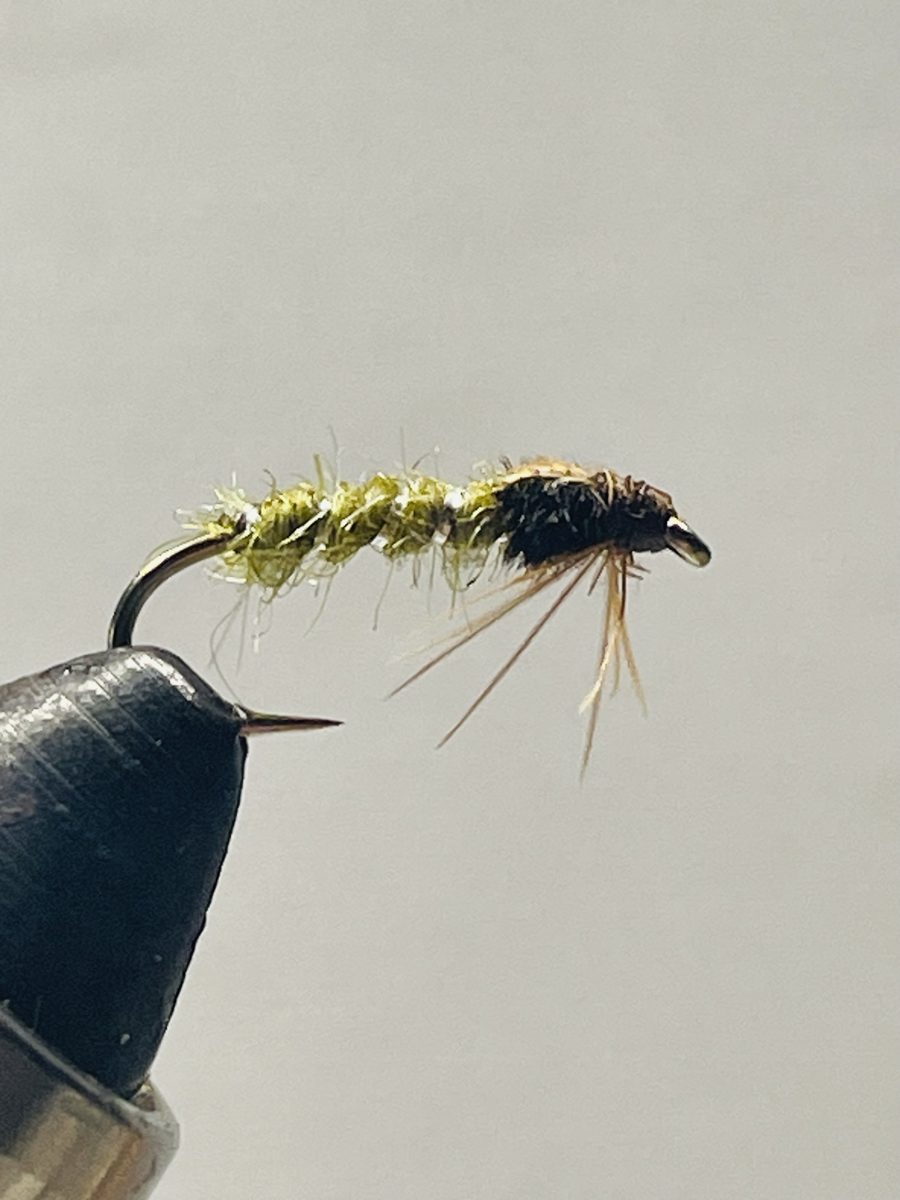
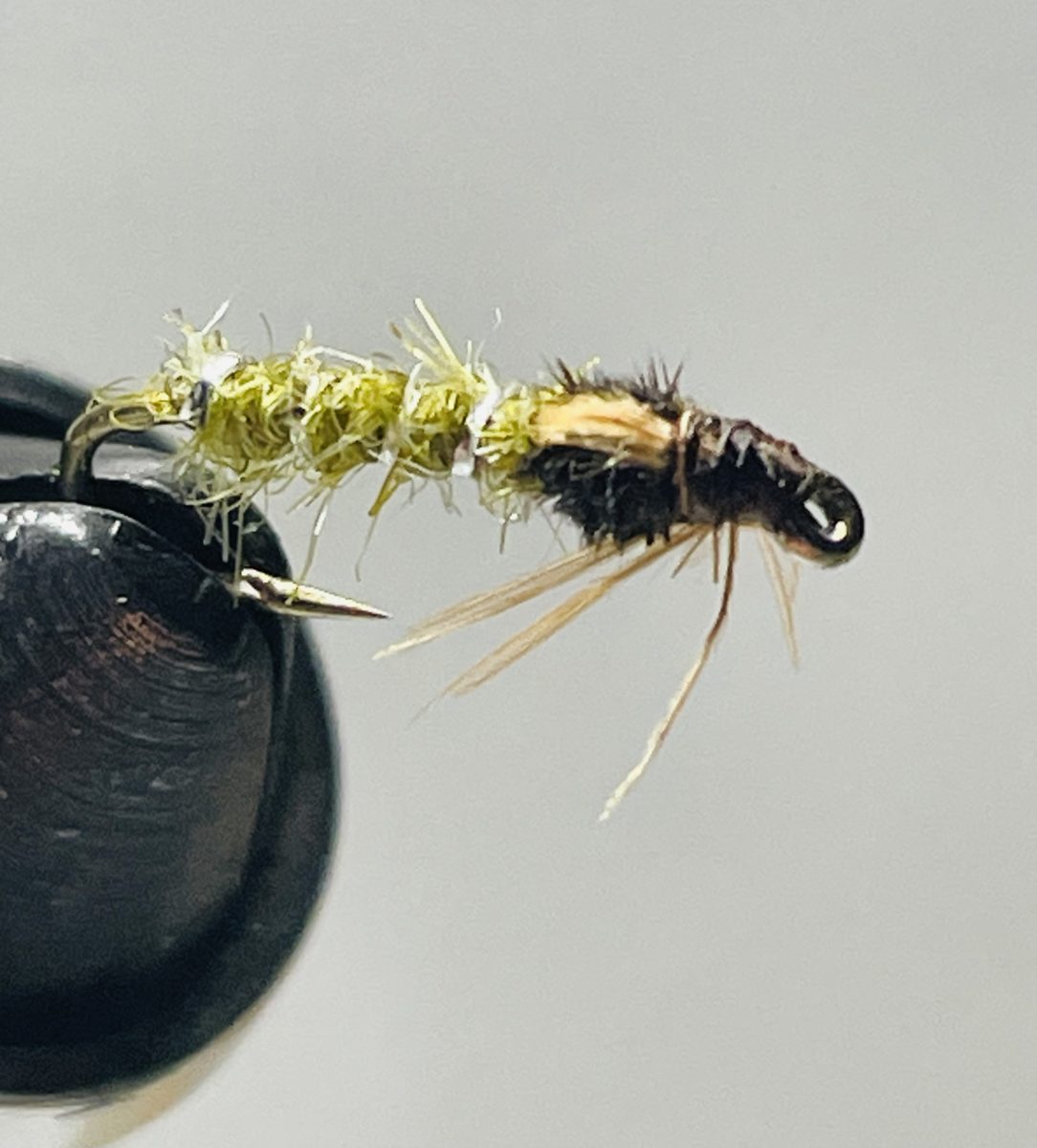
Video: Soft Hackle Dubbing Loop, the full soft hackle version of this stepOpens another site ›The finished fly
Sources
On the fly and its dressing: Mike Dawes, The Flytier's Manual (Nordbok, 1985; US edition Stoeger Publishing, ISBN 0-88317-130-9), page 31. Step artwork in that book is by Taff Price.
On the colours: John Goddard, Waterside Guide (pp. 102, 110–121); John Goddard (ed.), Stillwater Flies: How and When to Fish Them (A. & C. Black, 1989), p. 88, which names the Orange, Green, Brown and Cream Sedge Pupae as his.
On the reservoirs and their anglers: R. S. Wilson et al., "Biological aspects of Chew Valley and Blagdon Lakes, England," Freshwater Biology 5 (1975): 379–393, based on surveys from 1966 to 1973; Adrian V. W. Freer, Dr Bell of Wrington: Pioneer of Reservoir Fly Fishing (Welford Court Press, 2019); Howard A. Bell (Wikipedia) and the Wrington village archive on Dr Bell; Oliver Burch, Trout and Grayling Monthly Report, July 2019 (The Fishing Passport); Westwater Fly Fishing Club, Fly of the Month, July 2024; Orvis Fishing Reports, Blagdon Lake.
On the sedges recorded around the lakes: GBIF.org caddisfly (Trichoptera) occurrence records within about ten miles of Blagdon and Chew Valley Lakes, accessed November 2026, drawing on the iRecord caddisfly recording scheme, Bristol Regional Environmental Records Centre, SmartRivers and Environment Agency freshwater surveys.