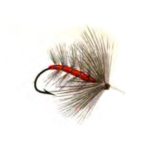
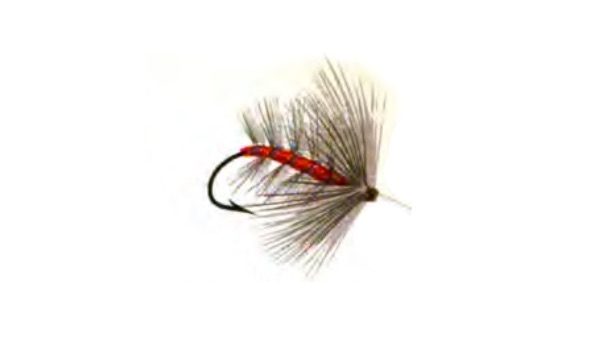
Ashy
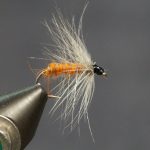
Dry Fly
Tied By Christian Andrews
Hook: #12-16 dry
Thread: black
Body hackle: light dun
Body: orange or red - wool, dubbing
Front hackle: light dun
Notes:
This Ashy is from Favorite Flies by Mary Orvis Marbury (1892)
Mary did not give a recipe for this fly except to say it was used to imitate caterpillars and tied with either a red or orange body and light dun or light ash <a class=”glossaryLink” aria-describedby=”tt” data-cmtooltip=”Hackle<!– wp:paragraph –>The term “hackle” has several meanings, each with its own history. Originally, in the 15th century, “hackle” referred to either a bird's neck plumage or a tool used for combing out long fibers of flax, hemp, or jute. The resemblance between a bird's neck feathers—particularly those that stand erect when the bird is defensive—and the prongs of the comb-like tool likely led to this connection.<br/><!– /wp:paragraph –><!– wp:paragraph –>Today, “hackle” can refer to one of the long, narrow feathers on a bird’s neck or saddle, as well as the neck plumage of domestic fowl. It can also denote a comb or board with long metal teeth used for dressing fibers.<br/><!– /wp:paragraph –><!– wp:paragraph –>In the plural form, “hackles” describes the erectile hairs along a dog’s neck and back, which stand up when the dog is agitated. This sense of the word extended into the 19th century to describe a similar reaction in humans. To “raise someone's hackles” figuratively means to make them angry or put them on the defensive.<br/><!– /wp:paragraph –><!– wp:paragraph –>Additionally, in fishing terminology, a “hackle” refers to an artificial fly made primarily from the filaments of a cock's neck feathers or the filaments themselves projecting from the head of an artificial fly.<br/><!– /wp:paragraph –>” href=”https://flyvault.net/encyclopedia/hackle/” data-gt-translate-attributes=’[{“attribute”:”data-cmtooltip”, “format”:”html”}]’ tabindex=’0′ role=’link’>hackle. She said light dun / light ash <a class=”glossaryLink” aria-describedby=”tt” data-cmtooltip=”Hackle<!– wp:paragraph –>The term “hackle” has several meanings, each with its own history. Originally, in the 15th century, “hackle” referred to either a bird's neck plumage or a tool used for combing out long fibers of flax, hemp, or jute. The resemblance between a bird's neck feathers—particularly those that stand erect when the bird is defensive—and the prongs of the comb-like tool likely led to this connection.<br/><!– /wp:paragraph –><!– wp:paragraph –>Today, “hackle” can refer to one of the long, narrow feathers on a bird’s neck or saddle, as well as the neck plumage of domestic fowl. It can also denote a comb or board with long metal teeth used for dressing fibers.<br/><!– /wp:paragraph –><!– wp:paragraph –>In the plural form, “hackles” describes the erectile hairs along a dog’s neck and back, which stand up when the dog is agitated. This sense of the word extended into the 19th century to describe a similar reaction in humans. To “raise someone's hackles” figuratively means to make them angry or put them on the defensive.<br/><!– /wp:paragraph –><!– wp:paragraph –>Additionally, in fishing terminology, a “hackle” refers to an artificial fly made primarily from the filaments of a cock's neck feathers or the filaments themselves projecting from the head of an artificial fly.<br/><!– /wp:paragraph –>” href=”https://flyvault.net/encyclopedia/hackle/” data-gt-translate-attributes=’[{“attribute”:”data-cmtooltip”, “format”:”html”}]’ tabindex=’0′ role=’link’>hackle feathers were worth their weight in gold because of how rare they were in the late 1800’s.
Use a dry fly hook of desired size
Lay down a base of black thread (per the illustration by Charles Orvis that shows a black head)
Tie in a dun <a class=”glossaryLink” aria-describedby=”tt” data-cmtooltip=”Hackle<!– wp:paragraph –>The term “hackle” has several meanings, each with its own history. Originally, in the 15th century, “hackle” referred to either a bird's neck plumage or a tool used for combing out long fibers of flax, hemp, or jute. The resemblance between a bird's neck feathers—particularly those that stand erect when the bird is defensive—and the prongs of the comb-like tool likely led to this connection.<br/><!– /wp:paragraph –><!– wp:paragraph –>Today, “hackle” can refer to one of the long, narrow feathers on a bird’s neck or saddle, as well as the neck plumage of domestic fowl. It can also denote a comb or board with long metal teeth used for dressing fibers.<br/><!– /wp:paragraph –><!– wp:paragraph –>In the plural form, “hackles” describes the erectile hairs along a dog’s neck and back, which stand up when the dog is agitated. This sense of the word extended into the 19th century to describe a similar reaction in humans. To “raise someone's hackles” figuratively means to make them angry or put them on the defensive.<br/><!– /wp:paragraph –><!– wp:paragraph –>Additionally, in fishing terminology, a “hackle” refers to an artificial fly made primarily from the filaments of a cock's neck feathers or the filaments themselves projecting from the head of an artificial fly.<br/><!– /wp:paragraph –>” href=”https://flyvault.net/encyclopedia/hackle/” data-gt-translate-attributes=’[{“attribute”:”data-cmtooltip”, “format”:”html”}]’ tabindex=’0′ role=’link’>hackle with fibers shorter than the hook gap by the tip shiny side out at the hook bend
Dub an orange body
Palmer the <a class=”glossaryLink” aria-describedby=”tt” data-cmtooltip=”Hackle<!– wp:paragraph –>The term “hackle” has several meanings, each with its own history. Originally, in the 15th century, “hackle” referred to either a bird's neck plumage or a tool used for combing out long fibers of flax, hemp, or jute. The resemblance between a bird's neck feathers—particularly those that stand erect when the bird is defensive—and the prongs of the comb-like tool likely led to this connection.<br/><!– /wp:paragraph –><!– wp:paragraph –>Today, “hackle” can refer to one of the long, narrow feathers on a bird’s neck or saddle, as well as the neck plumage of domestic fowl. It can also denote a comb or board with long metal teeth used for dressing fibers.<br/><!– /wp:paragraph –><!– wp:paragraph –>In the plural form, “hackles” describes the erectile hairs along a dog’s neck and back, which stand up when the dog is agitated. This sense of the word extended into the 19th century to describe a similar reaction in humans. To “raise someone's hackles” figuratively means to make them angry or put them on the defensive.<br/><!– /wp:paragraph –><!– wp:paragraph –>Additionally, in fishing terminology, a “hackle” refers to an artificial fly made primarily from the filaments of a cock's neck feathers or the filaments themselves projecting from the head of an artificial fly.<br/><!– /wp:paragraph –>” href=”https://flyvault.net/encyclopedia/hackle/” data-gt-translate-attributes=’[{“attribute”:”data-cmtooltip”, “format”:”html”}]’ tabindex=’0′ role=’link’>hackle in spiraling wraps over the body (tie off, clip extra)
Tie in and wrap a tight front <a class=”glossaryLink” aria-describedby=”tt” data-cmtooltip=”Hackle<!– wp:paragraph –>The term “hackle” has several meanings, each with its own history. Originally, in the 15th century, “hackle” referred to either a bird's neck plumage or a tool used for combing out long fibers of flax, hemp, or jute. The resemblance between a bird's neck feathers—particularly those that stand erect when the bird is defensive—and the prongs of the comb-like tool likely led to this connection.<br/><!– /wp:paragraph –><!– wp:paragraph –>Today, “hackle” can refer to one of the long, narrow feathers on a bird’s neck or saddle, as well as the neck plumage of domestic fowl. It can also denote a comb or board with long metal teeth used for dressing fibers.<br/><!– /wp:paragraph –><!– wp:paragraph –>In the plural form, “hackles” describes the erectile hairs along a dog’s neck and back, which stand up when the dog is agitated. This sense of the word extended into the 19th century to describe a similar reaction in humans. To “raise someone's hackles” figuratively means to make them angry or put them on the defensive.<br/><!– /wp:paragraph –><!– wp:paragraph –>Additionally, in fishing terminology, a “hackle” refers to an artificial fly made primarily from the filaments of a cock's neck feathers or the filaments themselves projecting from the head of an artificial fly.<br/><!– /wp:paragraph –>” href=”https://flyvault.net/encyclopedia/hackle/” data-gt-translate-attributes=’[{“attribute”:”data-cmtooltip”, “format”:”html”}]’ tabindex=’0′ role=’link’>hackle with fibers 1.5 hook gap; tie off; clip butt stem
Wrap in a black thread head
Whip finish; head cement